Showing posts with label housing. Show all posts

Wednesday, May 18, 2016

Economic Data Surprise Index Shows Continued Weakness

Today we get another glimpse into the behind-the-scenes machinations of the “data dependent” Federal Open Market Committee (FOMC) with the release of the minutes from the April 26-27 meeting.

While the Fed has a dual mandate of maximum employment and price stability, lately there has been considerable discussion about the how much the Fed should let global considerations factor into Fed policy.  Clearly, the pace of economic growth in China or the stability of euro zone has a significant downstream effect on economic activity in the United States.  Additionally, with 48% of revenues from the S&P 500 companies coming from international markets, policy formulation in an increasingly interconnected global economy is becoming more complicated with each advance in technology, communications and logistics.

Given this backdrop, just how does the data look?  For the past seven years I have been publishing an economic data surprise index that aggregates U.S. economic data relative to consensus expectations across areas such as employment, the consumer, housing/construction, manufacturing and inflation.  The chart below aggregates data across all these areas and shows data peaking relative to expectations during October 2014.  Since that peak, however, economic data relative to expectations deteriorated sharply, falling to an all-time low during the middle of January 2016 that was matched again at the end of last month. 


[source(s):  VIX and More]

If the Fed is indeed data dependent, then there is no avoiding the conclusion that aggregate data relative to expectations has been a disaster for the past 1 ½ months.  There are some signs of stability forming in the current environment and clearly the strength of the dollar and the price of crude oil will have a great deal to say about economic data going forward.  Then again, international events such as the Brexit vote and the evolution of negative interest rate policies of central banks across the globe may trump all domestic U.S. economic data.

[Readers who are interested in more information on the component data included in this graphic and the methodology used are encouraged to check out the links below. For those seeking more details on the specific economic data releases which are part of my aggregate data calculations, check out Chart of the Week: The Year in Economic Data (2010).]


Related posts:


Disclosure(s): none

Friday, June 1, 2012

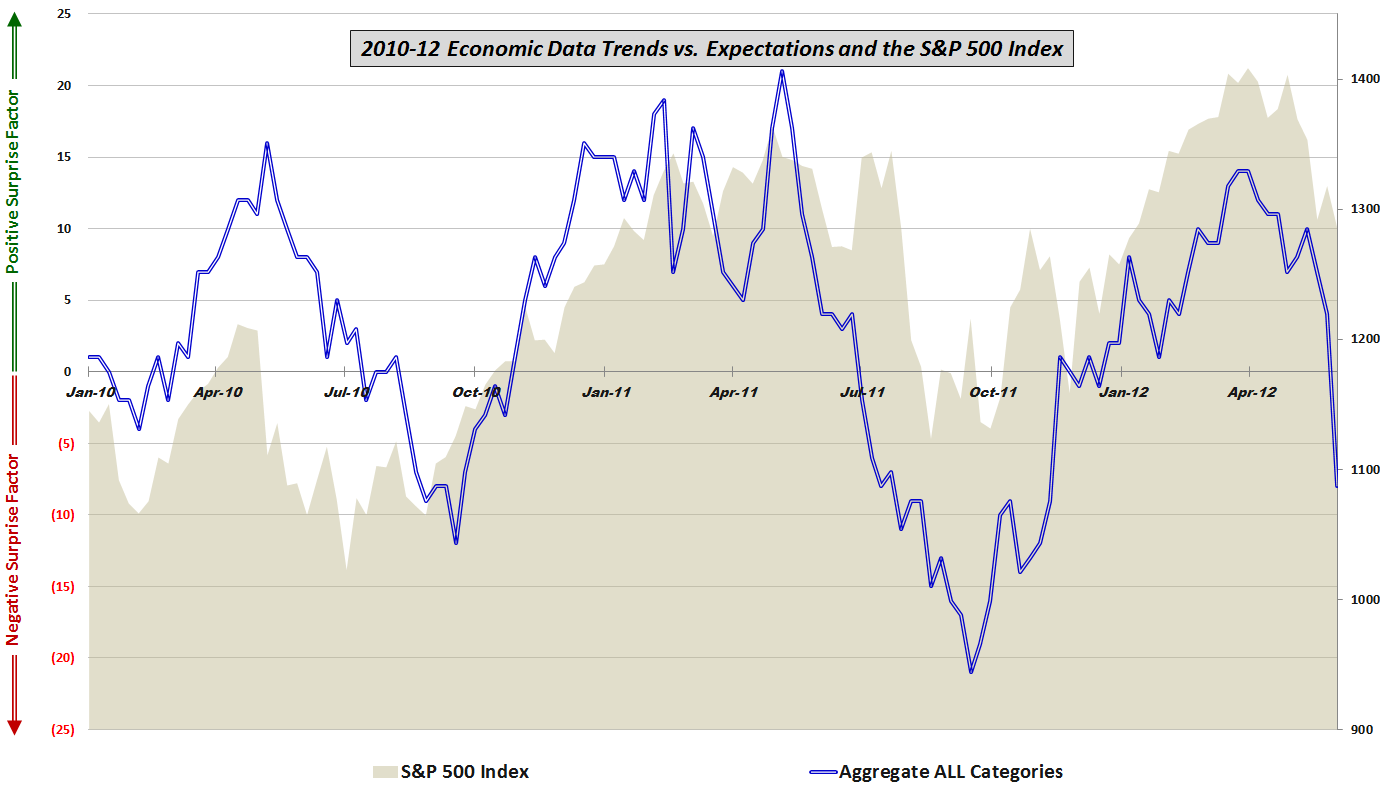
Worst Post-2009 Week in Economic Data Relative to Expectations

This week ties the record for the worst week ever in terms of economic data relative to expectations – at least in the 2 ½ years I have been collecting this data and putting it through my proprietary analytics.

I last reported on my analysis of economic data vs. expectations in the middle of April in Stocks and Economic Data on Upswing Despite Disappointing Manufacturing and Housing Numbers. At that time, I expressed concern about, the relative weakness of the manufacturing and housing data I noted:

“In both 2010 and 2011, it was the end of positive surprises in manufacturing and general economic data that coincided with bearish downturns in stocks. So far in 2012, the disappointments in manufacturing and general economic data have not been able to put a dent in the stock market rally. My sense is that this data and the stock market will be moving in the same direction within the next month. Whether that means an uptick in the data or a downtick in stocks remains to be seen.”

With the benefit of the data through today’s employment report, ISM manufacturing index and construction numbers, it is clear that the weakness is no longer confined to manufacturing and housing, but has also dragged down employment and well as consumer spending and confidence.

The chart below shows the aggregated data picture across all categories, since the beginning of 2010 across all categories.  For the record, the only other time there was a week in which data was this poor relative to expectations was in the middle of February 2011, at which point the data was pulling back from an all-time high, about 2 ½ months before data and equities topped and began their swoon.

This time around the story is obviously much different, but keep in mind that for the last six months or so stocks have been more correlated with employment data than with any other measure of economic activity.

[Readers who are interested in more information on the component data included in this graphic and the methodology used are encouraged to check out the links below. For those seeking more details on the specific economic data releases which are part of my aggregate data calculations, check out Chart of the Week: The Year in Economic Data (2010).]

Related posts:

[source(s): various]

Disclosure(s): none

Tuesday, April 17, 2012

Stocks and Economic Data on Upswing Despite Disappointing Manufacturing and Housing Numbers

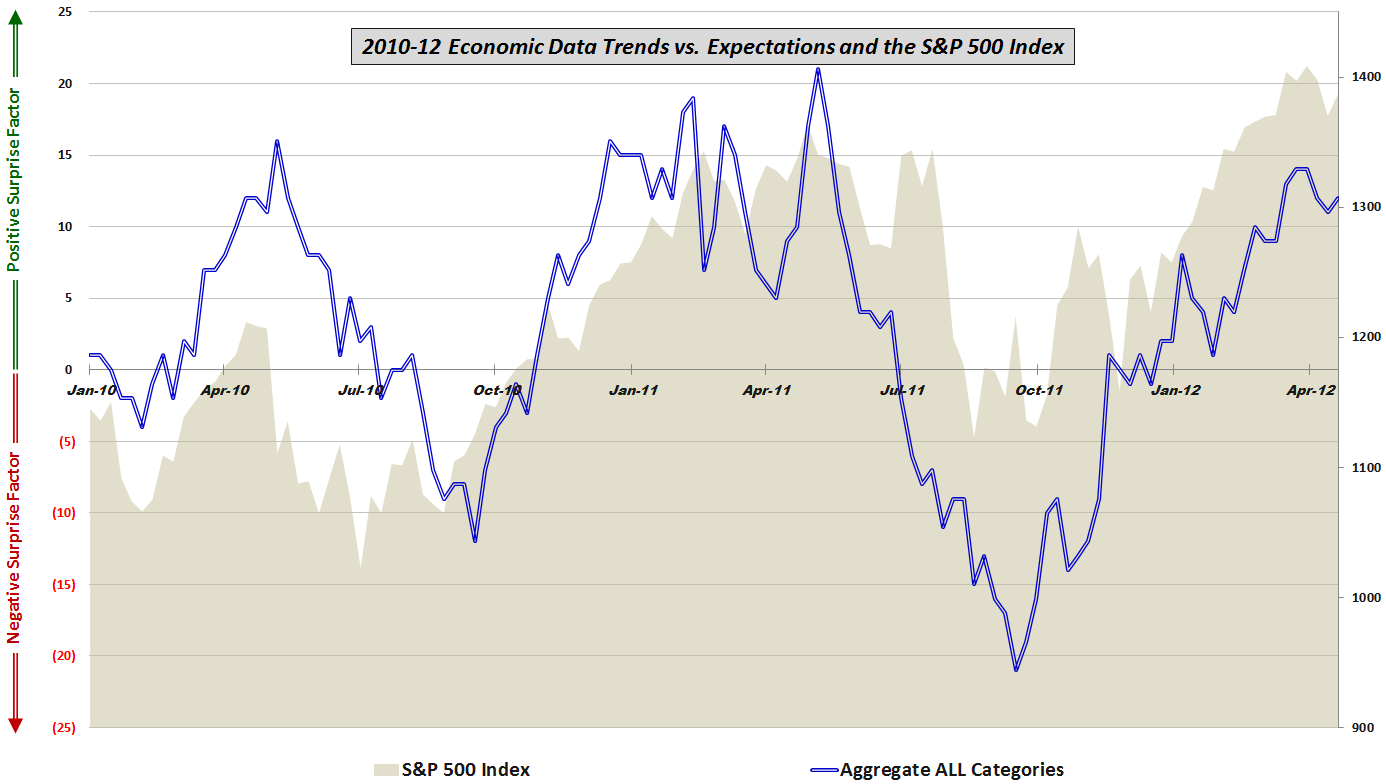
In many respects, today is a microcosm of the first 4 ½ months of 2012: industrial production and housing starts data fell short of expectations, yet stocks pushed higher regardless.

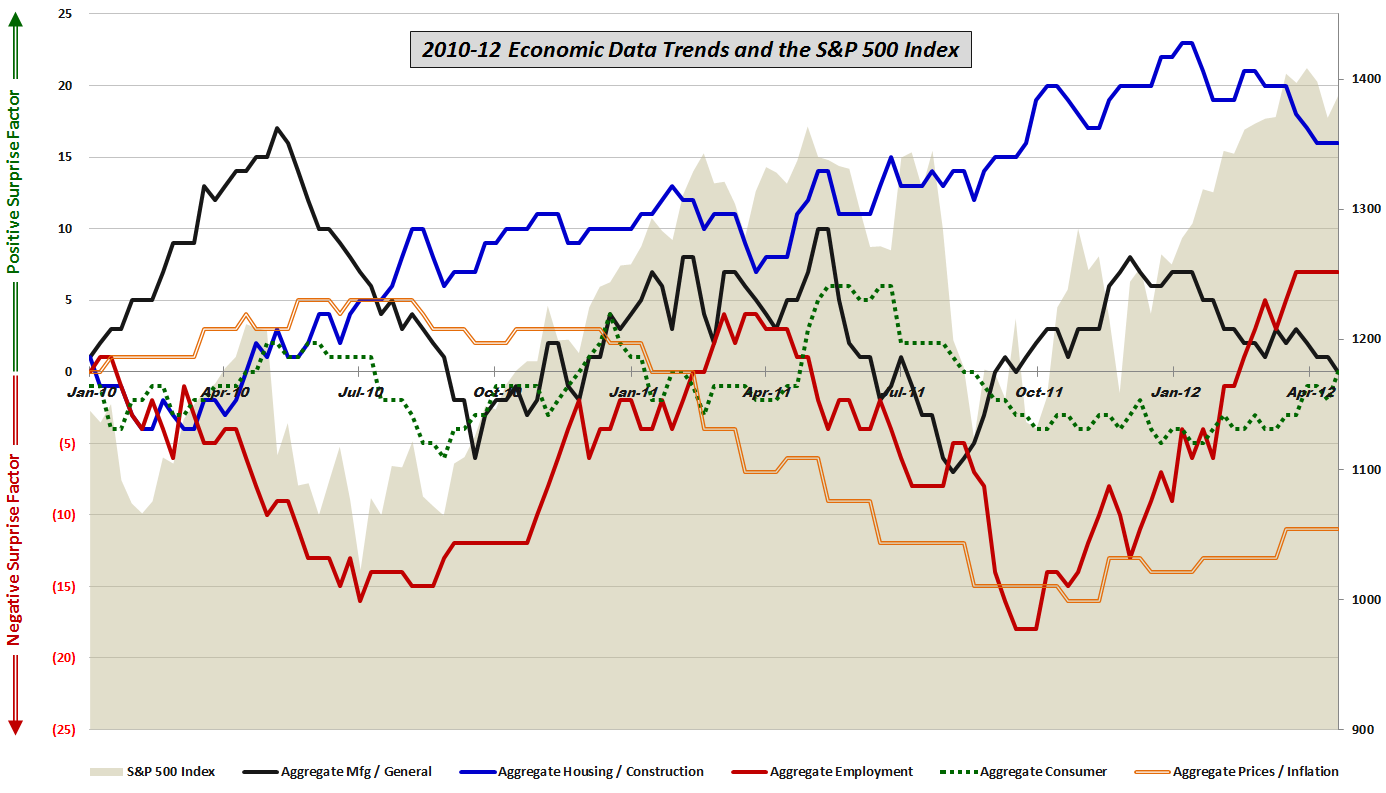
This is the third year I have been periodically publishing some proprietary data I developed with respect to economic data vs. expectations that I variously present in an aggregated format or across five groups of economic activity (manufacturing/general, housing/construction, employment, consumer and prices/inflation.) This time around I have elected to do both, with the aggregated data in the top chart and the detailed breakout in the lower chart.

The aggregated story tell the picture at 30,000 feet: economic data have been consistently topping expectations since late September and the stock market has risen in conjunction with better-than-expected news. The detail chart tells a more nuanced story. Here one can see positive surprises almost across the board in the fourth quarter of 2011, yet a rash of disappointments in 2012 in housing/construction as well as manufacturing/general economic data.

In both 2010 and 2011, it was the end of positive surprises in manufacturing and general economic data that coincided with bearish downturns in stocks. So far in 2012, the disappointments in manufacturing and general economic data have not been able to put a dent in the stock market rally. My sense is that this data and the stock market will be moving in the same direction within the next month. Whether that means an uptick in the data or a downtick in stocks remains to be seen.

[Readers who are interested in more information on the component data included in this graphic and the methodology used are encouraged to check out the links below. For those seeking more details on the specific economic data releases which are part of my aggregate data calculations, check out Chart of the Week: The Year in Economic Data (2010).]

Related posts:

Disclosure(s): none

[sources: various]

Monday, January 3, 2011

Chart of the Week: The Year in Economic Data (2010)

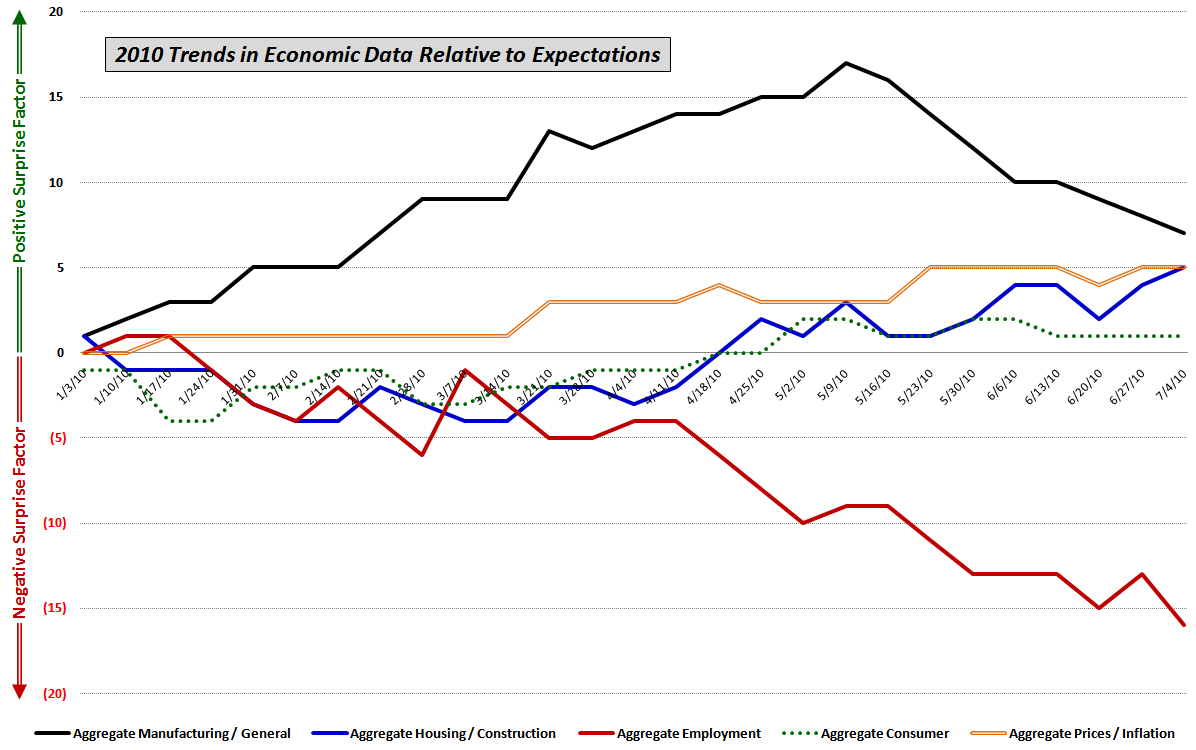
One of the blog’s surprise hits in 2010 was a series of charts I began which started out with the unwieldy title of Trends in Economic Data Relative to Expectations.

I have utilized this chart format to track the performance of key economic data releases relative to consensus expectations.

The data are sorted into five groups and include economic reports such as the ones highlighted below:

  • Manufacturing/GeneralGDP, ISM, Industrial Production, Capacity Utilization, Durable Goods, Factory Orders, Regional Fed Indices, Productivity, etc.
  • Housing/Construction – Building Permits, Housing Starts, Existing Home Sales, New Home Sales, Pending Home Sales, S&P/Case-Shiller Home Prices, Construction Spending, etc.
  • Employment Employment Report, Jobless Claims, etc.
  • ConsumerRetail Sales, Consumer Confidence, Consumer Sentiment, Personal Income, Personal Spending, etc.
  • Prices/Inflation – Producer Price Index, Consumer Price Index, etc.
For each report, I evaluate whether the data exceeds or falls short of consensus expectations. I then aggregate the data over time to see the extent to which certain segments of the economy are trending higher or lower relative to expectations.

The chart tells a couple of interesting stories for 2010. First, it was the manufacturing sector which provided the bulk of the positive surprises during the first half of the year and the propelled stocks to their April highs.

Manufacturing began to turn down in May, following stocks down. This was just about the time that housing and construction started to provide some evidence of positive surprises, but that sector did nothing to stem the tide of falling stock prices.

When stocks started to turn around at the end of August and make their big bullish move for the year, this coincided with an improving employment picture, a rebound in manufacturing and an upturn in the consumer.
Over the course of the year, economic data came very close to meeting expectations for all sectors except housing and construction, which was the surprise winner in the data vs. expectations sweepstakes.

Finally, as the year came to a close, it was employment which was most highly correlated with changes in stock prices, followed closely by a virtual dead heat between housing/construction and the consumer.

Related posts:

Disclosure(s): none

Thursday, August 5, 2010

Economic Data Trends in Advance of Nonfarm Payrolls

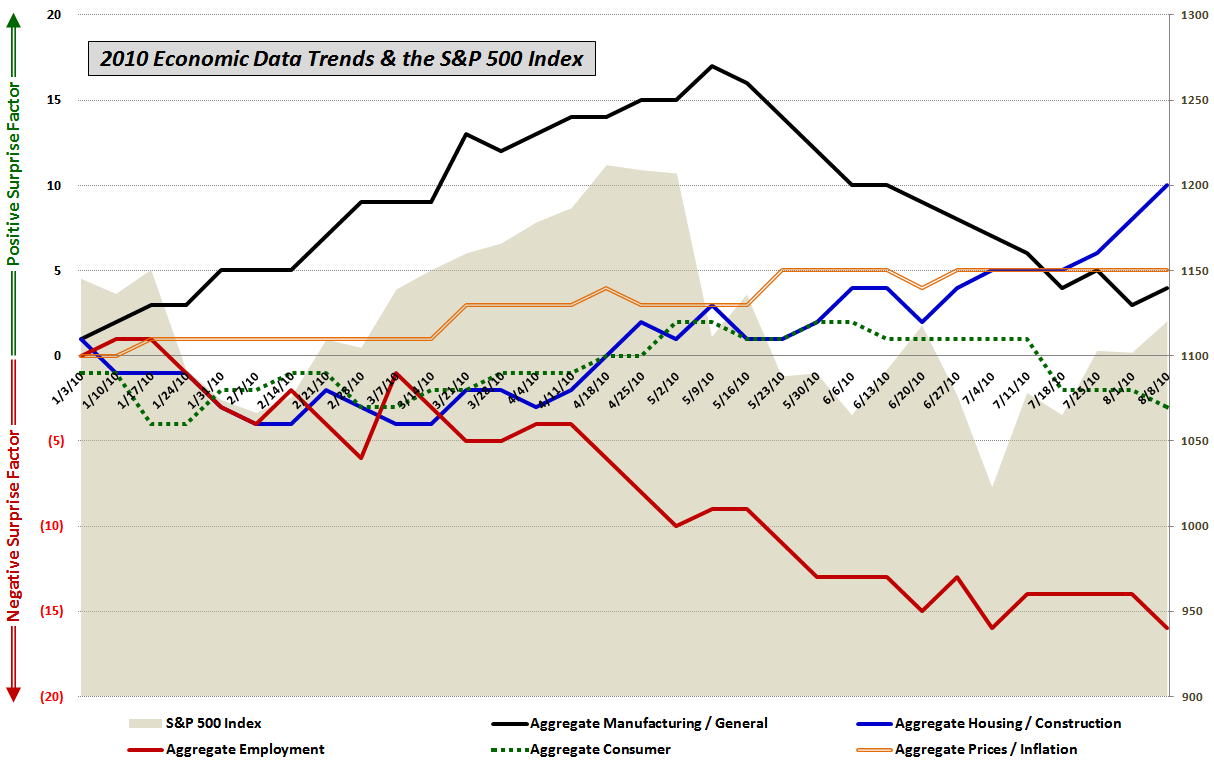
A little over a month ago, in Trends in Economic Data Relative to Expectations, I first posted a slightly different version of the chart below on the blog. The chart turned out to be a surprise hit, so this time around I am updating the data (a proprietary methodology in which I evaluate the performance of key economic data releases relative to consensus expectations) as well as adding the S&P 500 index as a beige area graphic.

In terms of takeaways, deteriorating employment and consumer data continue to drag down the economic recovery. Manufacturing, which was an area of strength early in the year, has more recently become a source of weakness. In terms of strength, I continue to be surprised that the aggregated construction and housing numbers are better than consensus estimates.

For additional details on the data included in each grouping, refer to the link above.

For more on related subjects, readers are encouraged to check out:


Disclosure(s): none

Friday, July 2, 2010

Trends in Economic Data Relative to Expectations

Before the long weekend, I thought I would post a chart I use in which I track the performance of key economic data releases relative to consensus expectations.

The data are sorted into five groups and include economic reports such as the ones highlighted below:

  • Manufacturing/General – GDP, ISM, Industrial Production, Capacity Utilization, Durable Goods, Factory Orders, Regional Fed Indices, Productivity, etc.
  • Housing/Construction – Building Permits, Housing Starts, Existing Home Sales, New Home Sales, Pending Home Sales, S&P/Case-Shiller Home Prices, Construction Spending, etc.
  • Employment – Employment Report, Jobless Claims, etc.
  • Consumer – Retail Sales, Consumer Confidence, Consumer Sentiment, Personal Income, Personal Spending, etc.
  • Prices/Inflation – Producer Price Index, Consumer Price Index, etc.

For each report, I evaluate whether the data exceeds or falls short of consensus expectations. I then aggregate the data over time to see the extent to which certain segments of the economy are trending higher or lower relative to expectations.

The chart below summarizes the trends in these five categories since the beginning of the year. In terms of performance relative to expectations, manufacturing (solid black line) has performed best, though the trend has turned down for the last two months or so. Not surprisingly, the worst performing area – by a considerable margin – has been employment (solid red line), where the trend relative to expectations has been consistently negative since the middle of April.

For more on related subjects, readers are encouraged to check out:


Disclosure(s): none

Nonfarm Payrolls and Backsliding

This morning’s nonfarm payrolls report confirms that the job creation portion of the economy which was strong in March through May has turned negative again, resulting in a net loss of 125,000 jobs in June. On the positive side, the private sector added 83,000 jobs during the month, while the loss of 225,000 temporary census workers was the sole reason for the negative headline number.

There were, however, some ominous signs in the nonfarm payroll data. These included a decline in the average hourly workweek (down 0.1 to 34.1 hours) as well as a decline of $0.02 in average hourly earnings to $22.53.

In addition to capturing the last 11 ½ years of payroll (blue and red columns) and unemployment rate (red and black line) data, the chart below is intended to highlight the perils of overreacting to the last data point. Note that particularly in the early stages of a recovery (i.e., the red box covering June 2002 – August 2003), the data tend to be choppy and any trends short-lived. I expect that the same dynamics are at work in the current environment. Employment is not the only area of concern at the moment. Housing is also suffering from some backsliding this month, as pull forward demand triggered by the government tax incentives is now giving way to several months of slow residual demand.

I am still anticipating a slow growth scenario for the balance of 2010, with economic expansion – and the accompanying data – moving forward in a fashion that will probably resemble the path taken by someone trying to drive a manual transmission vehicle for the first time.

For more on related subjects, readers are encouraged to check out:


[source: Bureau of Labor Statistics]

Disclosure(s): none

Wednesday, June 10, 2009

Historical Volatility Continues to Plummet

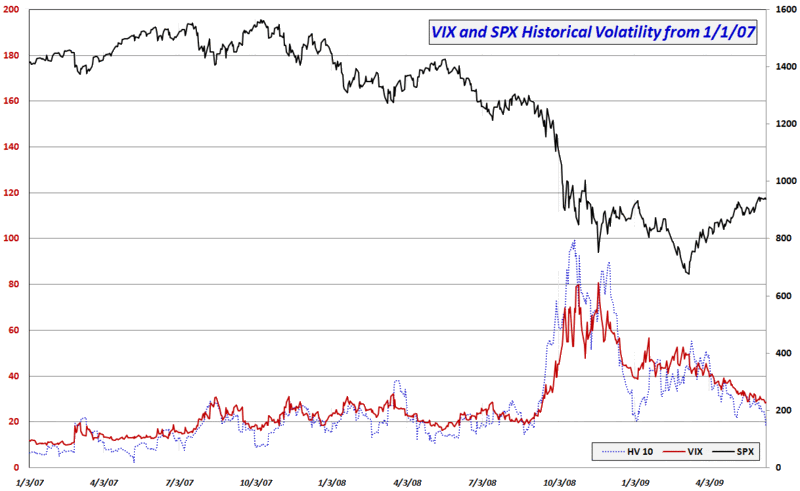
Further to this morning's pre-market post, Volatility in Context with VIX at Pose-Lehman Low, today’s 0.35% drop in the SPX means that it has now been four days since the S&P 500 index has moved more than 0.35%.

The range-bound trading is taking a heavy toll on historical volatility (HV), with today’s action pushing the 10 day HV in the SPX down from 21.54 to 18.10 – the lowest reading since September 3, 2008.

The graphic below attempts to put the current historical volatility levels into the context of the past 2 ½ years. Note that the current 10 day HV of 18.10 fits right in the middle of the range for this measure during 2007 (a year of very low volatility) and the pre-Lehman portion of 2008. In fact, given the recent historical record, I would be quite surprised to see 10 day HV fall any farther than the current level for at least another month or two.

Of course the VIX can continue to decline in the absence of falling volatility, but at some point historical volatility begins to provide some semblance of a floor below which the VIX is unlikely to remain.

On the other side of the coin, investors should also be aware that it has now been 26 sessions since the VIX was above the 35 level. If there is a catalyst (such retail sales numbers, housing data, industrial production statistics, Treasury auction results, the FOMC meeting in two weeks, etc.) that will change the volatility equation, then it is reasonable to look to 35 – not 40 or 50 – as the target for a VIX spike.

Finally, with volatility expectations shrinking almost on a daily basis, those who may be interested in speculative buying VIX out-of-the-money calls might find them a lot cheaper than anticipated – and perhaps a lot cheaper than they will be in another week or two.

[graphic: VIXandMore]

Sunday, March 22, 2009

Chart of the Week: Bottom in Housing Starts?

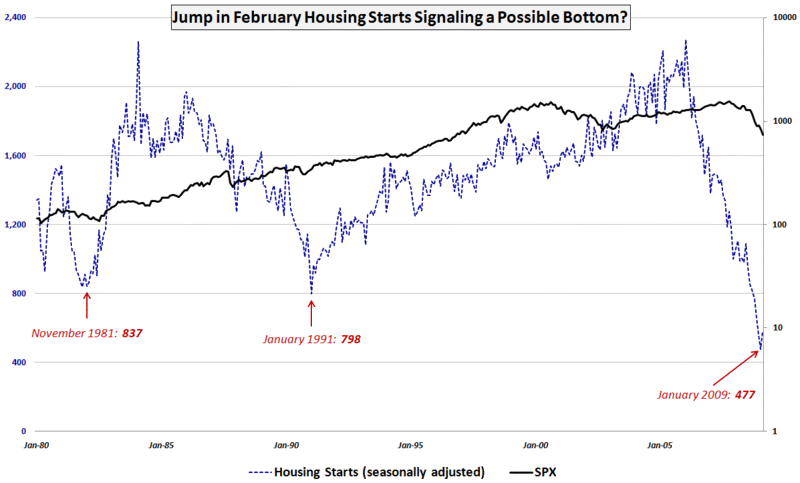
Conventional wisdom dictates that it is way too early to even contemplate a bottom in housing, where prices presumably have another 10-20% to fall. In light of the February housing starts data released on Tuesday, I am wondering if we might be closer to a bottom in housing than many of the pundits believe.

This week’s chart of the week tracks housing starts going back to the beginning of 1980 and shows the January 2009 number as an all-time low. The February data, which is subject to future revisions, shows a 22.2% increase from the January low in combined single-family (+1.1%) and multi-family (+82.3%) housing starts.

The February data could certainly be just a statistical anomaly, but the next data point that suggests a possible stabilizing of housing prices, increase in demand or significant decrease in inventories could cause a rapid reevaluation of where the housing market stands and where it may be going in 2009.

I am not yet a housing bull, but I will be watching tomorrow’s February existing home sales and Wednesday’s February new home sales very closely to see what the numbers tell us.

[source: Census Bureau, VIX and More]

Wednesday, January 28, 2009

Positive News in Housing Inventories

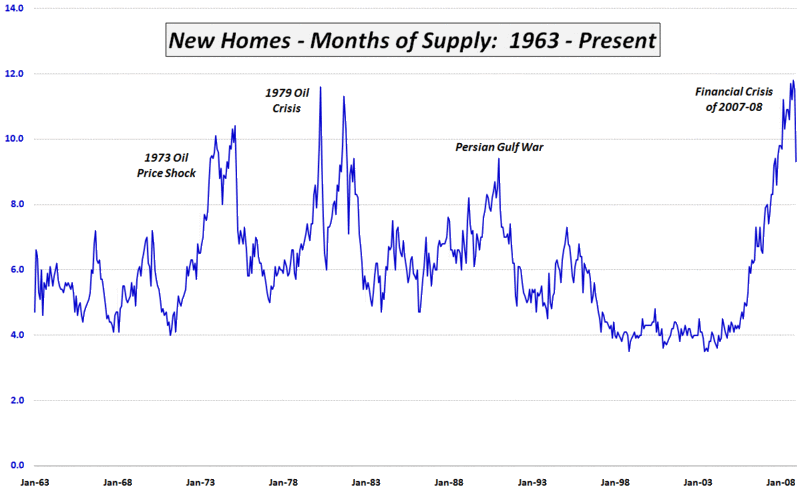
I have been maintaining for a long time (particularly in the subscriber newsletter), that the key to the bottoming process in the economy is housing and the key to housing prices is inventory.

While housing prices continue to fall, yesterday was the first glimpse of hope on the inventory front in a long time. In the graphic below, I have captured the months of supply of housing inventory since 1963. Note that the December data show the biggest drop in housing inventories in 28 years.

Before anyone gets too excited about this development, however, a couple of caveats are in order. Considering that months of supply is a function of total inventory and the transaction rate, there are several moving parts in these calculations. The fact that housing inventory is still at levels comparable to what was seen in early 2004 means that in absolute terms, there is still a room for considerable improvement before the inventory issue is addressed. Further, in some parts of the country the majority of the transactions are related to foreclosure activity. Given the high elasticity of foreclosure sales, this component of the transaction rate has to be taken with a very large grain of salt.

The economy has likely not yet reached a bottom, but there are encouraging signs. If housing inventory continues to fall and cash starts departing money market funds in search of better returns, then it is possible to at least entertain the possibility that equities have turned the corner.

[source: Census Bureau, VIX and More]

DISCLAIMER: "VIX®" is a trademark of Chicago Board Options Exchange, Incorporated. Chicago Board Options Exchange, Incorporated is not affiliated with this website or this website's owner's or operators. CBOE assumes no responsibility for the accuracy or completeness or any other aspect of any content posted on this website by its operator or any third party. All content on this site is provided for informational and entertainment purposes only and is not intended as advice to buy or sell any securities. Stocks are difficult to trade; options are even harder. When it comes to VIX derivatives, don't fall into the trap of thinking that just because you can ride a horse, you can ride an alligator. Please do your own homework and accept full responsibility for any investment decisions you make. No content on this site can be used for commercial purposes without the prior written permission of the author. Copyright © 2007-2023 Bill Luby. All rights reserved.
 
Web Analytics