Showing posts with label DRYS. Show all posts

Thursday, October 31, 2013

Halloween Monsters

In the spirit of the day and lacking the resources and imagination to do something as elaborate as the Guillermo del Toro couch intro for the 2013 Treehouse of Horrors episode of The Simpsons (definitely worth a click through) I have elected instead to construct a portfolio of what I am calling the Halloween Monsters – a group of ten stocks that have been absolutely killing it this year, leading the markets higher.

The list includes the following familiar momentum names:

I intentionally left off Google (GOOG), in spite of an excellent 2013, largely because this behemoth now has a $346 billion market capitalization and there are some limits on how quickly on organization this size can grow.

With the inclusion of Baidu, the list reminded me a little of something I did back in October 2007, when I sensed a little too much froth in the stock market and created something I called the OHFdex, which began as a “watch list of Overripe High Fliers” and quickly evolved into an index designed to track 14 such stocks. When the markets turned down, the group was pummeled, with some spectacular crashes from the likes of CROCS (CROX), Las Vegas Sands (LVS), DryShips (DRYS) and others.

The current list is certainly filled with high fliers, but whether they are overripe or capable of soaring higher is not as obvious as it was in October 2007 – at least for me. For that reason, I will keep a close eye on the Halloween Monsters portfolio going forward, as their movements will likely be a tip off as to where the broader markets are headed.

[source(s): Finviz.com]

At the very least, I expect the stocks on this list to offer some interesting fodder for the archives, just as the OHFdex did in 2007 and 2008. Who knows, perhaps the next iteration of the OHFdex is just around the corner.

For more on the OHFdex and similar flights of fancy, check out the links below.

Related posts:

Disclosure(s): none

Thursday, April 26, 2012

Whither Social Media Stocks?

Back in October 2007, sensing a little too much froth in the stock market, I created something I called the OHFdex, which began as a “watch list of Overripe High Fliers” and quickly evolved into an index designed to track 14 such stocks. When the markets turned down, the group was pummeled, with some spectacular crashes from the likes of CROCS (CROX), Las Vegas Sands (LVS), DryShips (DRYS) and others.

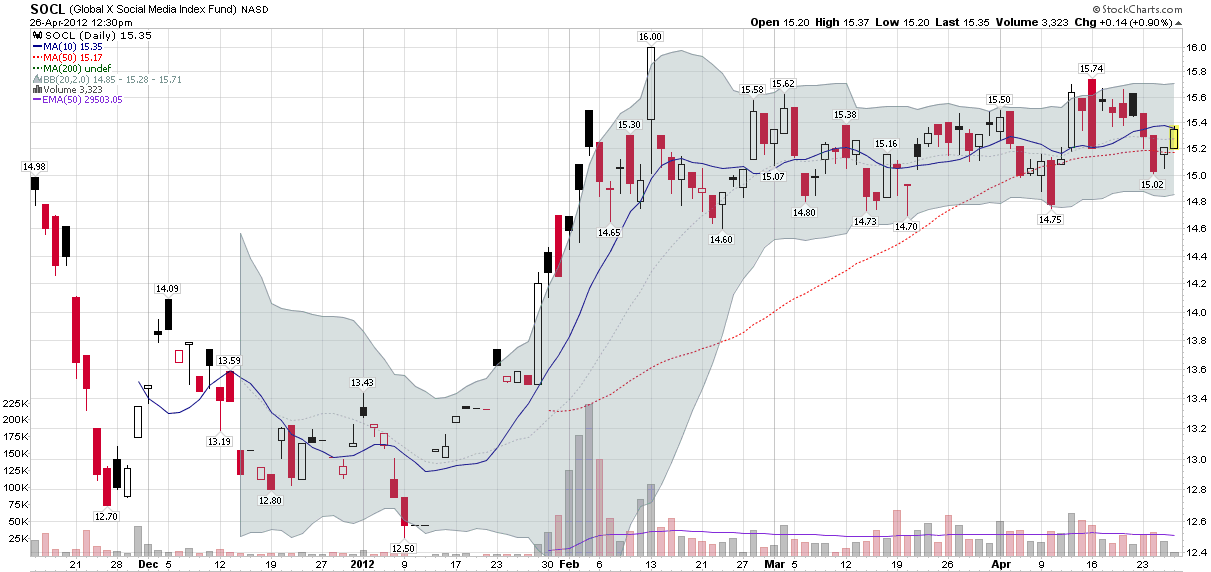
As stocks have continued their rise, I have thought about resurrecting the OHFdex, but I have not found sufficient reason to do so, until recently. The rise of social media stocks and some of the attendant valuations are the reason for my reconsidering the OHFdex. Clearly there will be winners as well as losers in this space, but relatively high valuations for LinkedIn (LNKD), Groupon (GRPN), Zynga (ZNGA), Pandora (P), Yelp (YELP), Angie’s List (ANGI), Jive Software (JIVE) and others have raised my eyebrows and even the launch of a Social Media ETF (SOCL, holdings) is enough to give me pause. The problem is that I have trouble picking the big winner from this group, particularly when adjusted for current market capitalization. The temptation is to short them all, but for now at least, it is time to put these stocks and counterparts such as RENN, YOKU, SOHU, REDF, DMD, FFN, etc. into a social media OHFdex and see how things play out.

I’m not saying this is October 2007 or tech media bubble 2.0, but every coal mine needs at least one canary.

As an aside, while I am lukewarm about the prospects for social media as a whole, I have been living on the bleeding edge of technology hardware and software for decades and am about as far from being a Luddite as one can be. I was surfing the Internet in the 80s, dragged my laptop on planes for at least two years before I saw anyone else do the same, had a US Robotics before it was branded “Palm Pilot,” bought my first digital camera in 1996, was on Facebook when it existed only inside two universities, and sometimes think that too much of my life has been spent as an inadvertent beta tester.

That being said, while it can be lots of fun to play with v0.9 of what might be the next big wave in technology, I wouldn’t recommend buying too many v0.9 stocks, particularly those that are based on nascent technologies.

Finally, if you have any interest in shorting these stocks and can’t find any shares available to short, consider buying puts, selling calls or creating a synthetic short position by doing both at the same time.

Related posts:

[source(s): StockCharts.com]

Disclosure(s): short GRPN, ZNGA, P and YELP at time of writing

Wednesday, December 31, 2008

Watch the Baltic Dry Index in 2009

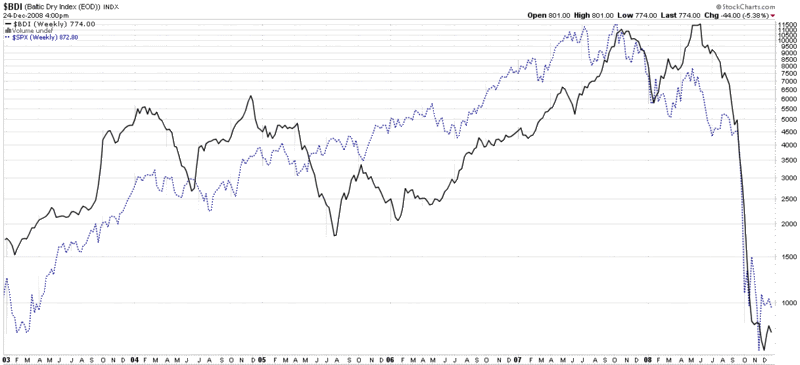
In 2009 investors will be scanning the globe for signs of economic recovery or deterioration. Among the many tools they should be watching in order to gauge the strength of global trade is the Baltic Dry Index (BDI.) The Baltic Dry Index measures shipping rates for dry bulk carriers that carry commodities such as coal, iron and other ores, cocoa, grains, phosphates, fertilizers, animal feeds, etc. In short, the BDI is an excellent proxy for global trade.

In the chart below, note how the BDI peaked after the S&P 500 index did in 2007 and bottomed after the SPX last month. The BDI may not be a leading indicator, but it is an important way to confirm whether moves in global equities are being reflected in an increase in global shipping. If the BDI fails to rally in 2009, be skeptical of any rally in stocks.

For those who are interested in following stocks of some of the leading dry bulk carriers, a good place to start is with Diana Shipping (DSX), DryShips (DRYS), and Excel Maritime Carriers (EXM).

[source: StockCharts]

Wednesday, November 12, 2008

People Trading BIDU Also Traded…

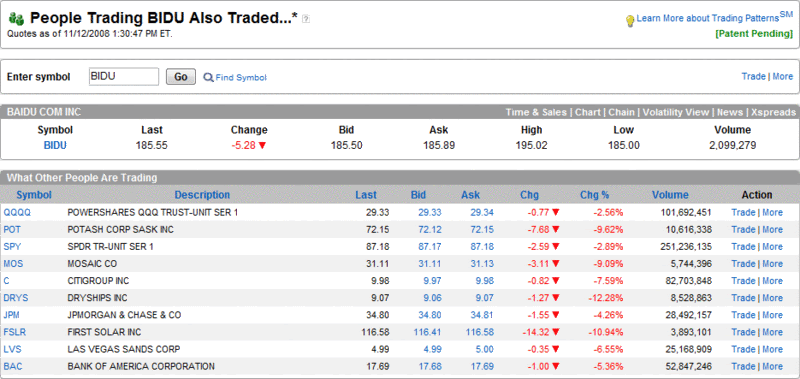
Back in September 2007, I started periodically posting snapshots from the optionsXpress Trading Patterns feature and chose to highlight the highly speculative Chinese internet search firm, Baidu (BIDU), then trading at 299, as my guinea pig. Over the course of seven months, I twice updated what traders who traded BIDU were also trading at optionsXpress when BIDU was at 380 on 10/30/2007 and when it was at 350 on 4/22/2008.

I just captured the most recent Trading Patterns update, which shows traders who are trading BIDU (currently at 185) are still active in the most volatile names in agriculture, financials, shipping, solar, and casinos. The stocks on the top ten list: Potash (POT), Mosaic (MOS), Citigroup (C), JPMorgan Chase (JPM), Bank of America (BAC), DryShips (DRYS), First Solar (FSLR), and Las Vegas Sands (LVS). Also on the list are two ETFs, QQQQ and SPY. Either optionsXpress customers have been cleaning up on the short side or they are a little early to the bull party.

[source: optionsXpress]

Tuesday, February 19, 2008

Portfolio A1 Beats SPX by 15.5% in First Year, Helped by Commodity Theme

With two of the five focus positions in agriculture and energy, the commodities theme has been good to Portfolio A1. W&T Offshore (WTI), the oil and gas exploration and production company, is now up 15.4% in the two weeks it has been in the portfolio. Last week’s biggest winner was Terra Industries (TRA), which posted a 10% gain for the week, moving up with the red-hot nitrogen fertilizer space.
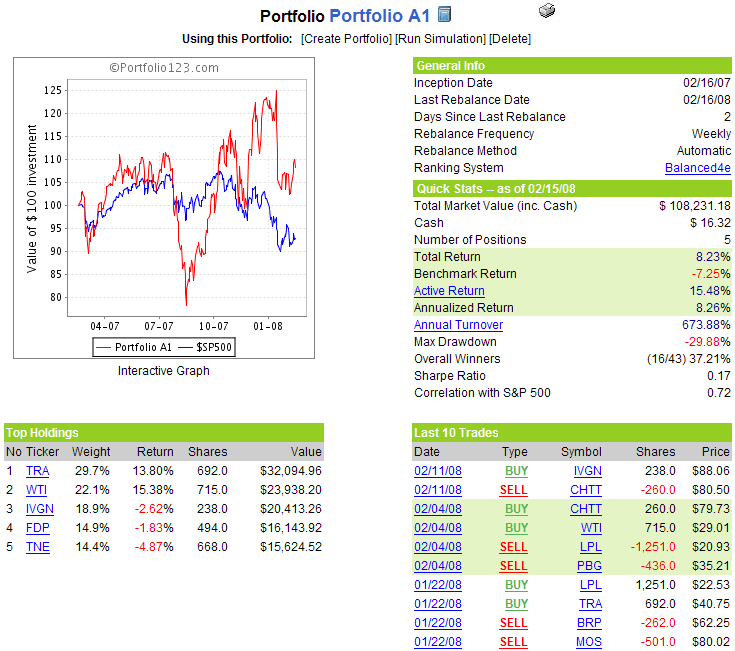
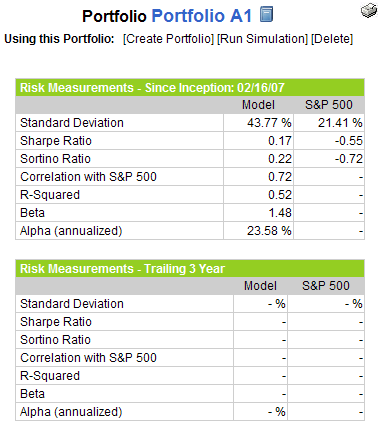
After one full year of performance (since the February 16, 2007 inception), Portfolio A1 officially goes in the books with a return of +8.23%, compared to a -7.25% move in the benchmark S&P 500 index over the same period, a net performance gain of 15.48% by the portfolio over the benchmark.

In terms of risk-adjusted return, the graphic to the right shows that Portfolio A1 has had an average beta of 1.48 and an impressive annualized alpha of 23.58% during the first year that the portfolio has been up and running.

In many respects, this portfolio was established to provided focused approach to "fishing for whales." That approach has been largely successful if a little inconsistent during the first year, landing such strong momentum stocks as of MOS, DRYS, TEX, PBR, RIO and others. Part of what makes finding so many big winners possible is a very high annual turnover. At 674%, this is clearly a trading portfolio, not a buy and hold approach. Losses are generally cut quickly and a new hook goes over the transom almost every week. I look forward to seeing how the portfolio fares in the second year, as we begin that year with what looks to be an extremely challenging investment environment.

Monday, December 31, 2007

Portfolio A1 to Best SPX By 20% in 2007

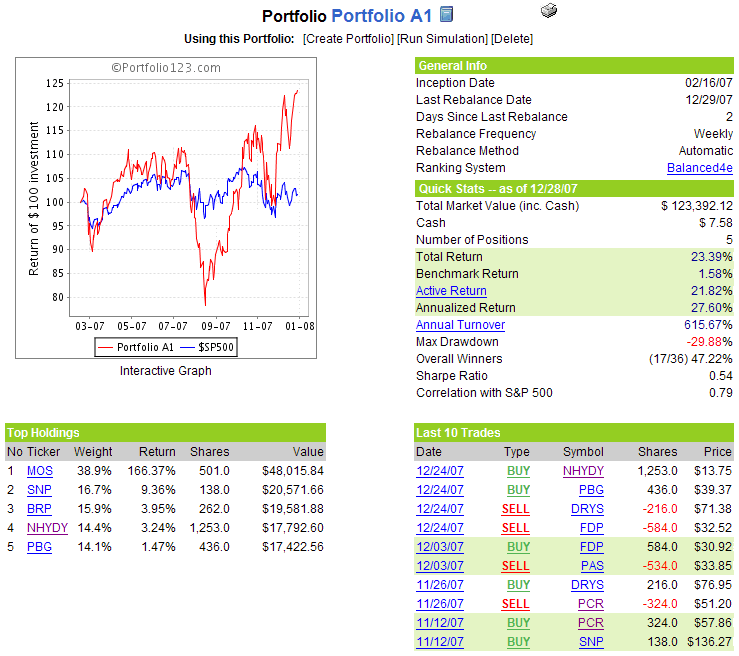
On the heels of a strong fourth quarter, it looks as if Portfolio A1 will finish 2007 with at least a 20% advantage over the benchmark S&P 500 index since the portfolio’s February 16th inception. With one trading day left in the year, Portfolio A1 has a 23.4% gain, a full 21.8% better than the 1.6% gain in the SPX during this period.

I will publish some additional statistics once 2007 is in the books, but suffice it to say with the likes of MOS, DRYS, TEX, PBR, RIO and others in the portfolio over the past 10 ½ months, we have been fishing in very rich waters.

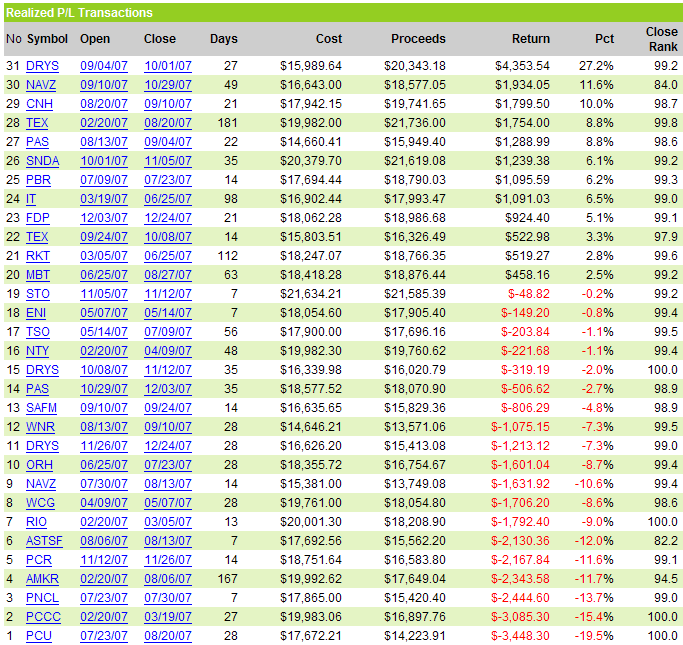
In addition to the usual equity curve and summary information, I have added a list of positions that were closed out during the year.

There no changes to the portfolio this week.

A snapshot of the portfolio is as follows:


Monday, December 24, 2007

Portfolio A1 Reshuffles Holdings for Holidays

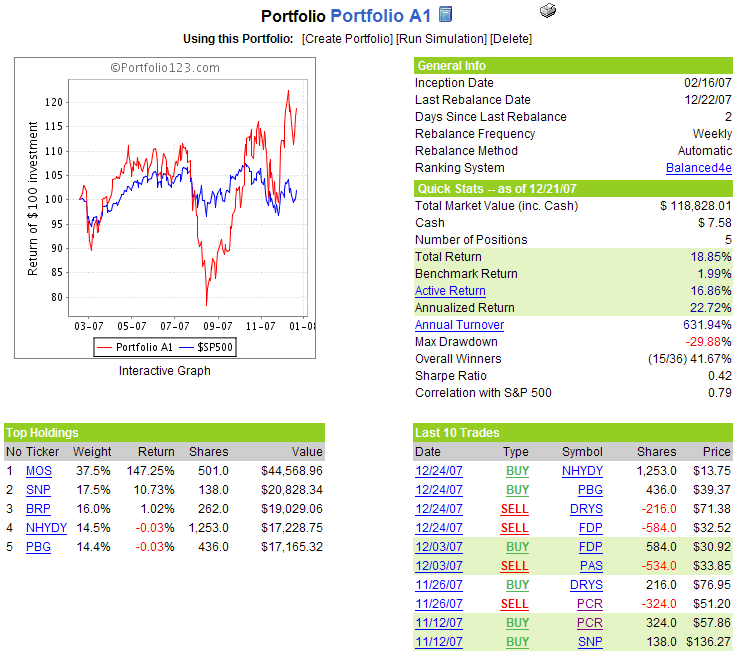
Portfolio A1 continued its strong performance last week, with cumulative gains of 18.9% since the portfolio’s February 16th inception – 16.9% better than the 2.0% return of the benchmark S&P 500 index during this period.

Notwithstanding the excellent recent run, this high turnover portfolio continues to seek out better opportunities and therefore dropped DryShips (DRYS) and Fresh Del Monte Produce (FDP), replacing them with Norwegian energy and aluminum giant Norsk Hydro (NHYDY), as well as The Pepsi Bottling Group (PBG), a Pepsi subsidiary. I find the Pepsi move a little surprising, especially since the portfolio had already experimented with PepsiAmericas (PAS) in November. How can a computer program have an affinity for a particular brand…?

There are no additional changes to the portfolio this week.

A snapshot of the portfolio is as follows:

Monday, December 10, 2007

Portfolio A1 Finishing Year With Big Gains

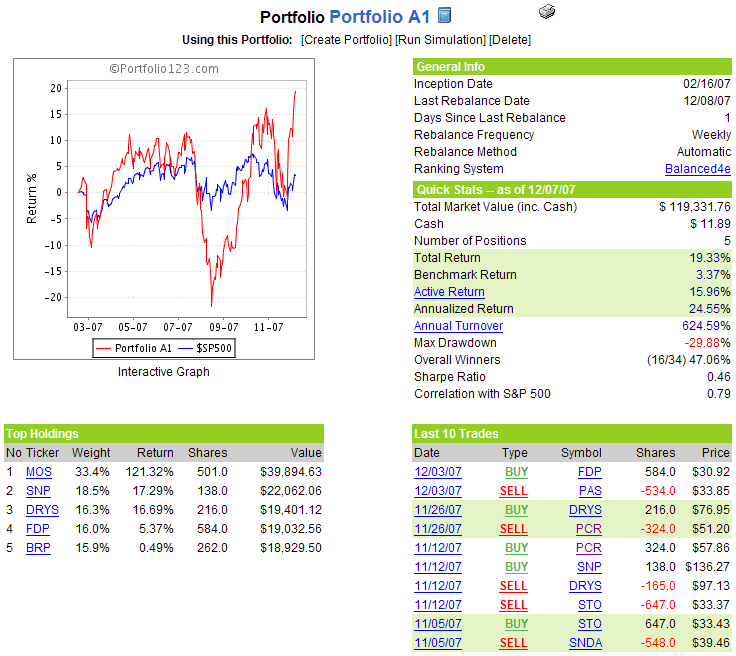
What was largely an up and down year for Portfolio A1 through Thanksgiving has suddenly turned out to be a very successful one, thanks to what is shaping up as a very strong finish. Essentially even on the year at Thanksgiving, Portfolio A1 is now up 19.3% just two weeks later, putting a lot of space between the portfolio and the benchmark S&P 500 index, which is now showing a 3.4% gain since the portfolio’s February 16th inception.

While a bullish run in Sinopec (SNP) and a resurgent DryShips (DRYS) have helped, the 121% gain in Mosaic (MOS), added to the portfolio in mid-August, is the primary reason that the portfolio has made such impressive recent gains.

Given that the portfolio is putting up such superb numbers, I am inclined to reverse my previous thinking and continue to highlight it here past the end of the year, rather than start a new portfolio from scratch.

There are no changes to the portfolio this week.

A snapshot of the portfolio is as follows:

Monday, December 3, 2007

Portfolio A1 Moves Up Smartly

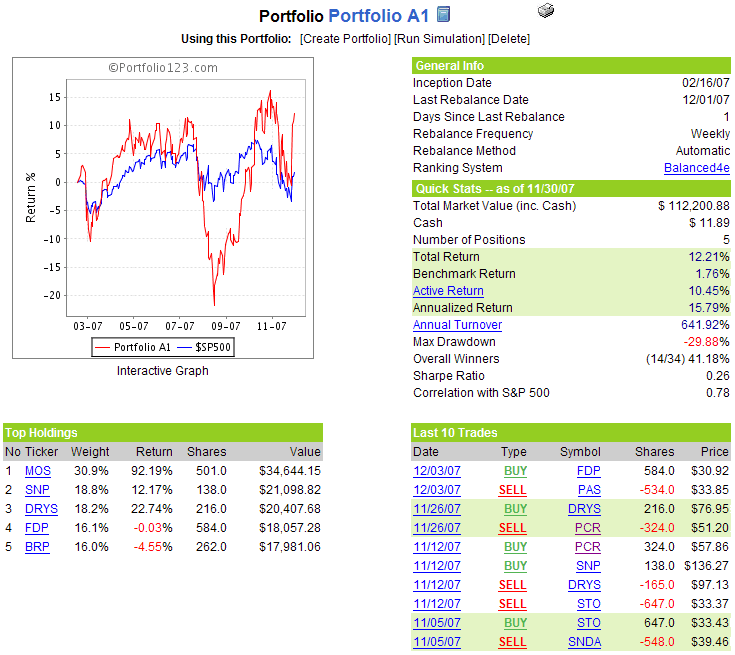
It was a very good week for Portfolio A1 – and an excellent week for the portfolio’s top three holdings. With Mosaic (MOS) gaining 13.4%, Sinopec (SNP) up 13.7%. and DryShips (DRYS) surging 22.8%, it is not surprising that the full portfolio tacked on 10.6% in a remarkable week.

With less than a month to go in the trading year, Portfolio A1’s cumulative 12.2% gain is 10.4% better than the meager 1.8% gain in the benchmark S&P 500 index.

Despite the recent success, the portfolio is not standing pat, as beverage company PepsiAmericas (PAS) is being swapped out for Fresh Del Monte Produce (FDP) in a move that I cannot attempt to explain. As fun as it has been watching and commenting on the doings of this mechanical portfolio, I am looking forward to rolling out a discretionary portfolio at the beginning of the new year.

There are no other changes to the portfolio this week.

A snapshot of the portfolio is as follows:

Sunday, November 25, 2007

Portfolio A1 Dragged Down By Perini (PCR)

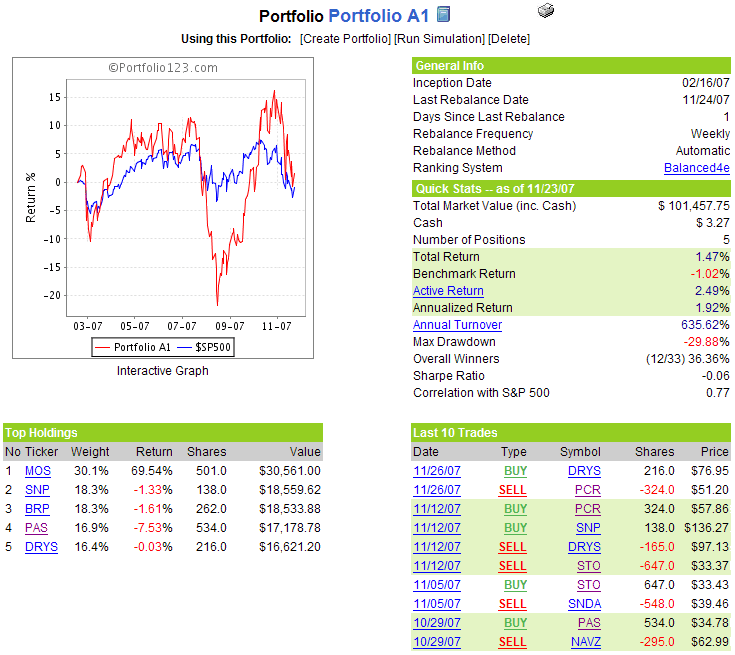
With a little over a month to go in the trading year, Portfolio A1’s 1.5% gain provides only a slim margin over the 1.0% loss in the benchmark S&P 500 index. That margin shrank substantially last week, on the heels of continued weakness in Perini (PCR).

When stories start circulating with headlines like Stop the Blank Checks to Iraq Contractors, it is no surprise to see the stocks Perini and other top contractors in Iraq and Afghanistan suffer in the wake of a swirl of bad publicity. After losing 11.5% in two weeks, Perini (PCR) is now down 32% from its July high and is being dropped from the portfolio as a result.

Replacing Perini in the portfolio is the first stock to be bought on three separate instances: DryShips (DRYS). Portfolio A1 rode DryShips up earlier in the year and had less success with an early October buy. If the global commodity boom continues, this may look in retrospect to be an excellent buy on weakness; on the other hand, if the anxieties and slowing economic growth in the US start to be felt around the globe, then it may be a long time before DryShips’ stock approaches the October highs once again.

With the addition of DryShips, the portfolio looks to be positioned aggressively for the final five weeks of the year. If it turns out that we are in a bear market, that 2.5% cushion over the SPX will likely be long gone by the end of December.

There are no other changes to the portfolio this week.

A snapshot of the portfolio is as follows:

Wednesday, November 21, 2007

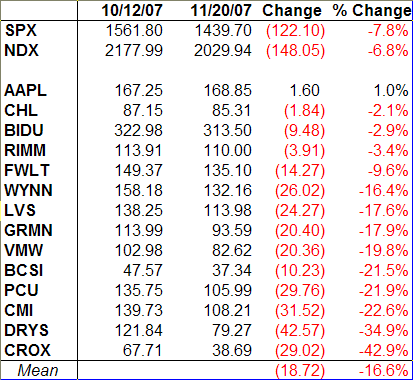
OHFdex Update

Since several readers expressed some interest – or at least some amusement – in the OHFdex (Overripe High Fliers Index) I unveiled back on October 12th, I though it might be interesting to see how these high fliers have fared during the recent market turmoil.

Given that most major indices peaked at the end of October, I did not expect the changes from October 12 to November 20 to be particularly dramatic, but as can be seen below, the devastation over the past 5 ½ weeks has been widespread and substantial, even though it is only a small portion of most of the peak to trough losses over the past three weeks.

The companies that have fared the best during the period in question have done so partly with a stronger post-October 12 runup, but also by doing a better job of weathering the current downturn. These are the tech stalwarts, AAPL and RIMM (GOOG was also up 11 points during this span), as well as the two Chinese tech plays, BIDU and CHL.

I have been short five stocks on this list at one time or another during the past three weeks: AAPL; BIDU; GRMN; DRYS; and CROX. I suspect that most of the easy money on the short side has already been made, but if the NDX fails to hold 2000 and if the NASDAQ composite cannot stay above the 200 day SMA (currently 2584), I’ll flip from neutral to bearish and look to this list to find where the momentum money is most nervous.


Monday, November 12, 2007

Portfolio A1 Increases Lead Over SPX as Markets Drop

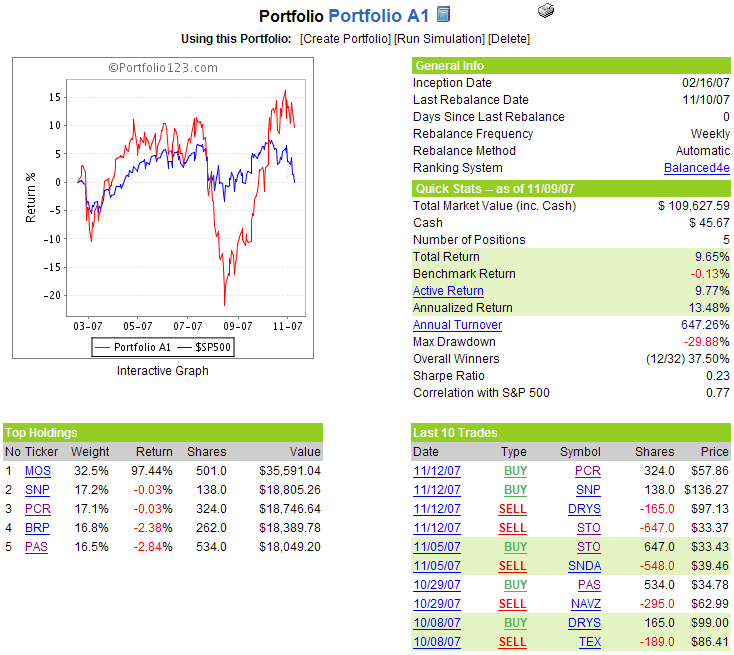
After the disastrous mid-August performance, it was heartening to see Portfolio A1 outperform the benchmark S&P 500 index during last week’s market turbulence. While the margin of outperformance was small, this now means that the portfolio is up 9.6% since the February 16, 2007 inception – a period in which the SPX is down 0.1%.

Some of the portfolio’s individual holdings did not fare particularly well during the week, with the result that the stock ranking system has elected to drop DryShips (DRYS) and StatoilHydro (STO). These stocks are being replaced by China Petroleum & Chemical Corp., more commonly known as Sinopec (SNP), as well as Perini (PCR), the large Boston-based construction company. In spite of the very strong year it has had, I am not sure I would be chasing Perini at this point, but, this being a mechanical portfolio, all I can do is raise an eyebrow and be prepared to eat some crow.

There are no other changes to the portfolio this week.

A snapshot of the portfolio is as follows:

Wednesday, October 31, 2007

Selling Fear with a DryShips Bear Call Spread

About a week and a half ago Condor Options suggested an excellent mantra for those whose investing universe is populated by the likes of fear, greed, implied volatility, and the VIX: “Sell your fear to somebody else!”

It’s a simple concept, really, and one that shares much of what I try to do with the VIX. The hard part, of course, is to have the composure to calmly sell fear while others are panicking to such as a degree as to threaten to drive the price of fear even higher.

One obvious way to implement the selling fear strategy would be to do something like sell VIX calls whenever the VIX rises 15% above its 10 day simple moving average.

Consider a similar approach for individual stocks. For example, Adam at Daily Options Report posted an implied volatility chart that shows how implied volatility in DryShips (DRYS) has increased almost 50% in the past few days, as the stock hit an air pocket and fell 14% in a matter of minutes, a feat captured and analyzed nicely by Tim Knight at The Slope of Hope. Buoyed by Cramer, the continued bull market, and other more benign forces, DRYS has rallied almost 10% today, but now has some new battle scars.

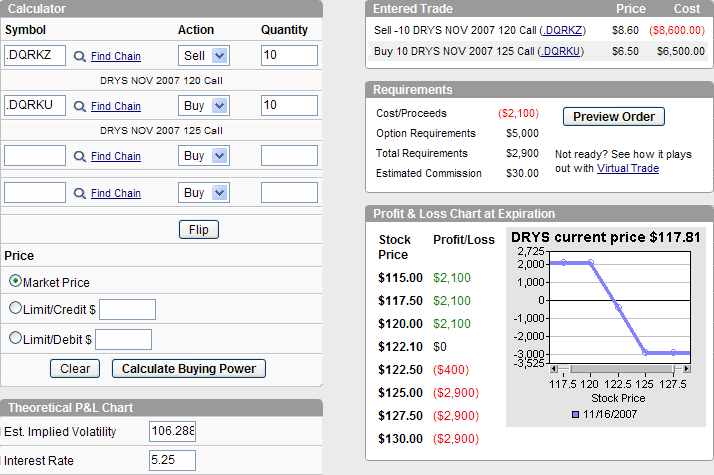
It is possible that DRYS has put in a top and is now broken and vulnerable to bear attacks. Then again, this may be just another brief moment in time where the rocket ship shifts gears (see Tim Knight’s historical perspective above) before accelerating to the moon. I’m not brave enough to be long or short DRYS at the moment, but I will sell volatility at the current level. There are many ways to do this, but one way to harvest premium is with a bear call spread (aka short call spread, vertical credit spread, etc.) Thanks to the prodding I have received from several readers, I have provided an example of a bear call spread trade below from optionsXpress. Note that the trade consists of selling slightly out of the money calls and hedging/reducing risk by buying an equal amount of calls that are farther out of the money at a lower price. This trade is done for a credit, with the difference in cash in the trader’s account up front. Time decay is on the side of the trader, but the position should be actively managed, so that losses can be cut if DRYS moves sharply over 120 and threatens to go after its previous 52 week high. This is a high risk trade (a split of 120/130 or 125/130 would decrease risk significantly), but a lot less risky than a directional play on a stock with a triple digit implied volatility.

Now, did someone say something about an FOMC meeting…?

Monday, October 29, 2007

Mosaic (MOS) Continues to Lead Portfolio A1

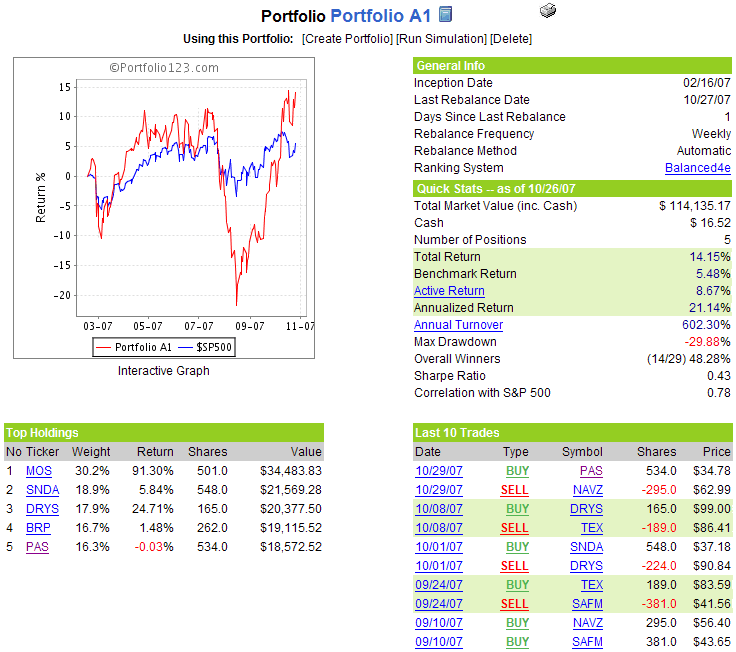
The title is probably a considerable understatement, but what else can you say about a stock that is up 91% in only ten weeks in the portfolio?

The amazing run of The Mosaic Company (MOS) has helped to push Portfolio A1’s performance to a cumulative return of 14.15% since the portfolio inception on February 16, 2007. This is 8.67% better than the 5.48% returned by the benchmark S&P 500 index during the period.

Mosaic’s performance has triggered a number of thoughts about portfolio design, backtesting, and the likelihood of catching lightning in a bottle. Simply stated, in the 8 ½ months that Portfolio A1 has been up and running, it has purchased 27 stocks. Almost half of these stocks are up 50% during this period and 30% (MOS, DRYS, BRP, PCU, PBR, RIO, CNH, and SNDA) are up an astonishing 100% or more. The bottom line is that I believe it is possible identify stocks that have a high likelihood of doubling or tripling in one year (with attendant risk, of course) and build portfolio rules to maximize the probability of capturing those gains during the time they are held in one’s portfolio. I will expand upon this going forward, but Portfolio A1 should provide some evidence to support that contention.

There is one change to the portfolio: Navistar International (NAVZ) has been dropped and is being replaced by returnee PepsiAmerican (PAS), the beverage bottler. There are no other changes to the portfolio this week.

A snapshot of the portfolio is as follows:

Monday, October 22, 2007

Portfolio A1 Pulls Away from SPX

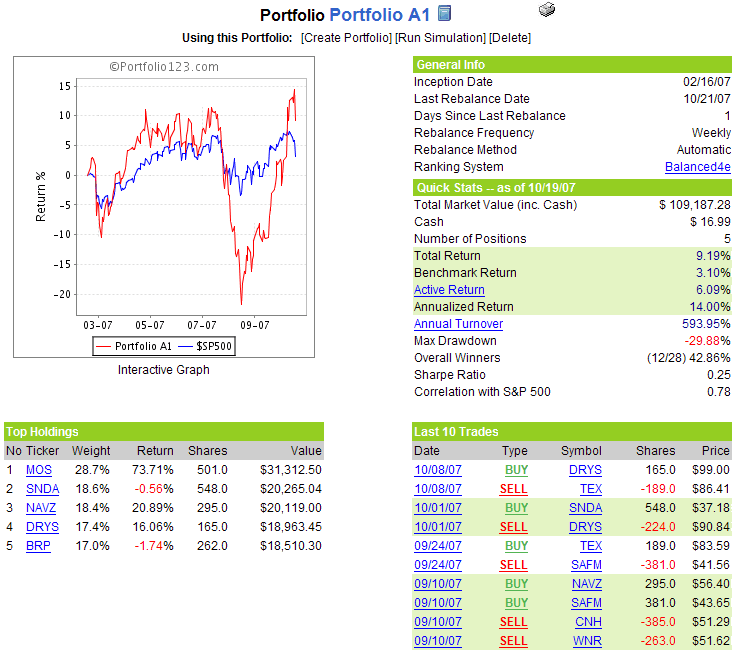
It was a crazy week, but when all the dust had settled, the 3.0% loss in Portfolio A1 was less than that of the 3.9% drop in the benchmark S&P 500 index. With last week in the books, the cumulative return for Portfolio A1 since inception sits at 9.2%, almost three times that of the 3.1% return for the SPX during the period.

DryShips (DRYS) led the way up from Monday through Thursday, before falling 8.9% Friday. The only stock to finish the week in positive territory was The Mosaic Company (MOS), which added 1.3%, but as it is the portfolio’s largest holding (28.7%), the gain provided the portfolio with a disproportionate boost. Going forward, this dry bulk carrier and fertilizer producer should provide important clues about not only the health of the economy, but about pricing power in these two sectors as well.

Since the rules of this portfolio are such that it is long only, I expect Portfolio A1 to be tested once again in the coming week. If the bulls return before the week is over, I think this portfolio is well positioned to continue to outperform. If we have another week selling and a whiff of an extended bear, I suspect this portfolio will have difficulty continuing to outperform the SPX with the current holdings.

There are no changes to the portfolio this week.

A snapshot of the portfolio is as follows:

Monday, October 15, 2007

Portfolio A1 Gains 9.8% in Week

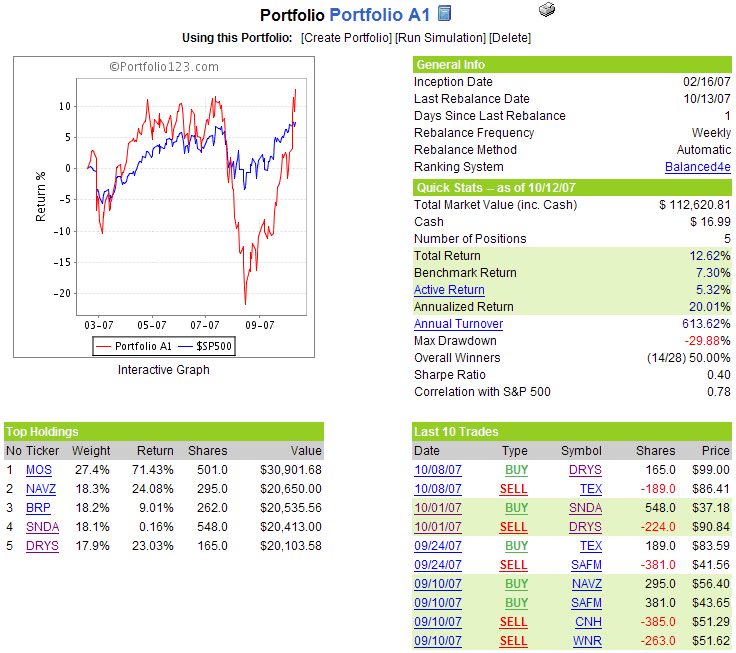
The highly volatile Portfolio A1 roared past the benchmark S&P 500 index last week, with a stunning gain of 9.8% on the week. The gains bring Portfolio A1’s cumulative return since the February 16, 2007 inception to 12.6%, which is also 5.3% greater than that of the SPX during the same period.

Two stocks were responsible for most of the weeks gains: DryShips (DRYS) was up 23.1%; and The Mosaic Company (MOS) added 17.7%. The gain in MOS brings the fertilizer producer’s cumulative return to an eye-opening 71.4% in the eight weeks it has been in the portfolio – far and away the best performer in the portfolio to date.

It has been a dramatic roller coaster ride for this portfolio over the past three months, which makes this a good time to reiterate that the purpose of this portfolio is to aggressively maximize capitalize gains in the context of a concentrated, high risk strategy. One glance at the equity curve tells the story.

There are no changes to the portfolio this week.

A snapshot of the portfolio is as follows:

Monday, October 8, 2007

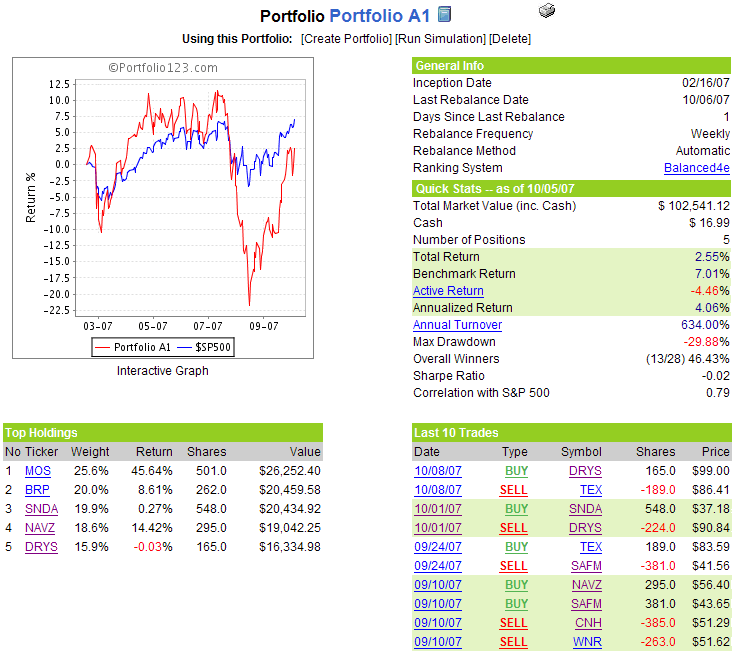
Portfolio A1 Reconsiders DryShips (DRYS)

Last week I expressed my surprise that the portfolio had decided to sell out its position in DryShips (DRYS) after the stock registered a 27% gain in just four weeks in the portfolio. In retrospect, my skepticism looks warranted, as DRYS logged an 8.9% gain last week, while the stock it was replaced with, Shanda Interactive (SNDA), was only able to add 0.3% during the week. That differential, which meant a net of about 1.7% to Portfolio A1 last week, accounts for all of the 1.4% lost relative to the benchmark S&P 500 index last week.

Ironically, Portfolio A1’s stock ranking system has reconsidered this week and decided to add DryShips (DRYS) once again, while dropping the one other stock that has had two round trips in the portfolio: Terex (TEX).

While Portfolio A1 continues to try to run down the S&P 500, I am refining the next iteration of my public portfolio in the background and am readying for a January 1, 2008 launch. One of the most important changes is that this portfolio will not be a 100% mechanical system. It will be partly discretionary, so that I will be able to make decisions along the lines of overriding a sell signal in DRYS, if I don’t think it is appropriate.

There are no other changes to the portfolio this week.

A snapshot of the portfolio is as follows:

Monday, October 1, 2007

Portfolio A1 Jumps 5% in Week

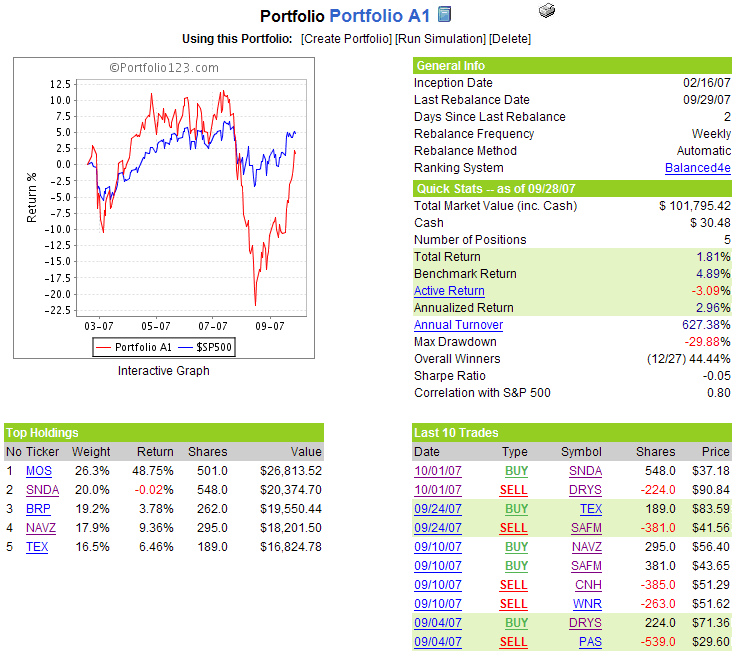
As the equity curve below shows, the August plunge has largely been eradicated in September, thanks in part to an impressive 5% gain in the portfolio last week. The strong week puts Portfolio A1’s cumulative return back into the plus column, with gains since the February 16th inception now at 1.8%. While this performance continues to trail the 4.9% gain registered by the benchmark S&P 500 index during the same period, an optimist might venture a small smile for the first time in about two months.

One unusual aspect to last week’s gains is the decision by the stock ranking system to drop DryShips (DRYS) after a stunning 27% gain in just four weeks in the portfolio. This is the first time the portfolio has dropped a double digit gainer and it is a little bit of a head scratcher, but perhaps the stock ranker has turned HAL on me taken up to reading Investor’s Business Daily, specifically a Friday article titled Smiling Dry-Bulk Shippers See The Boom Times Lasting For Years.

To replace DryShips, the portfolio has decided to dive headlong into China by picking up Shanda Interactive (SNDA), the Shanghai-based interactive entertainment company. In my discretionary trading I am short China stocks at the moment, so this portfolio may provide yet another interesting competition between man and machine.

There are no other changes to the portfolio this week.

A snapshot of the portfolio is as follows:

Tuesday, September 25, 2007

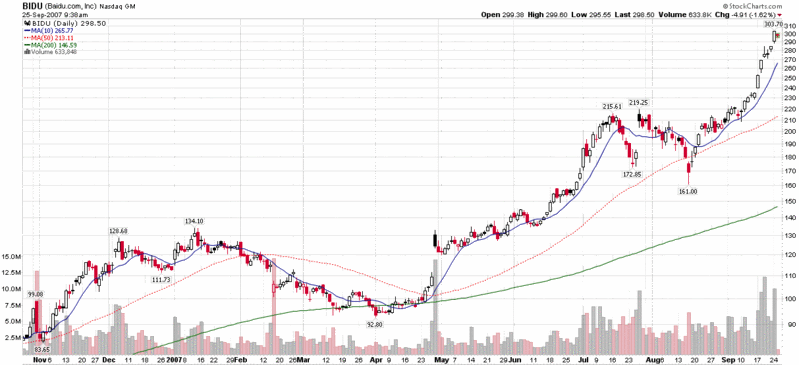
BIDU: Hogs (Eventually) Get Slaughtered

As I write this, BIDU is trading at about 301, meaning that if you got in near the August 16 low, you may be sitting on a 140 point profit.

I was indeed fortunate enough to grab some BIDU on August 16th, though nowhere close to the day’s low of 161. Over the course of the past few weeks I have been taking profits, with less than 10% of my initial position remaining after selling some earlier this morning.

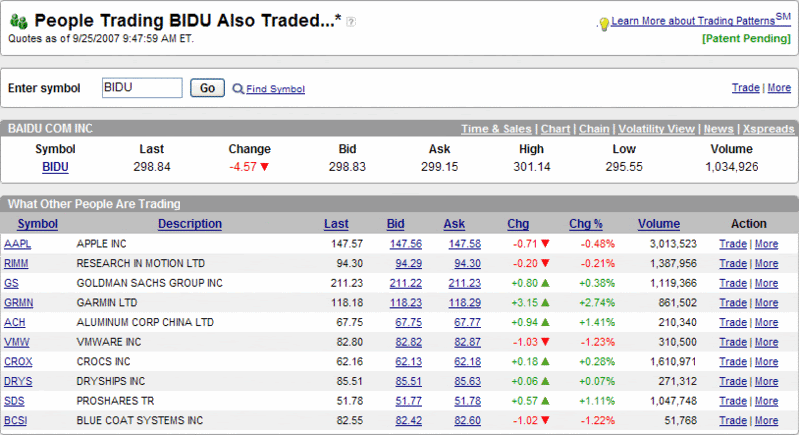
As I was selling some shares, it occurred to me that it might be time to update my watch list of “Overripe High Fliers.” This is a list of ten momentum stocks that I keep a close eye on and expect to provide some clues about speculative activity. These stocks should be strong when the market is rallying and move sharply down when the market turns down. The list currently consists of AAPL, BCSI, BIDU, CROX, DRYS, FSLR, GRMN, LVS, RIMM and VMW.

In keeping with Amazon’s “people who bought X also…” approach, optionsXpress has a tool that tells you what people who traded BIDU were also trading. The results, in the graphic below, could easily be an updated list of those “Overripe High Fliers.” Consider that when BIDU finally makes a sharp turn south (and I expect a -20 day soon), the rest of the stocks on this list will probably be dumped with the same bath water. Contrarians, aim your guns at these targets.


…and don’t count on the nearly vertical rise in BIDU to continue much longer. As a general rule, the steeper the rise, the more spectacular the fall back to earth.

Monday, September 24, 2007

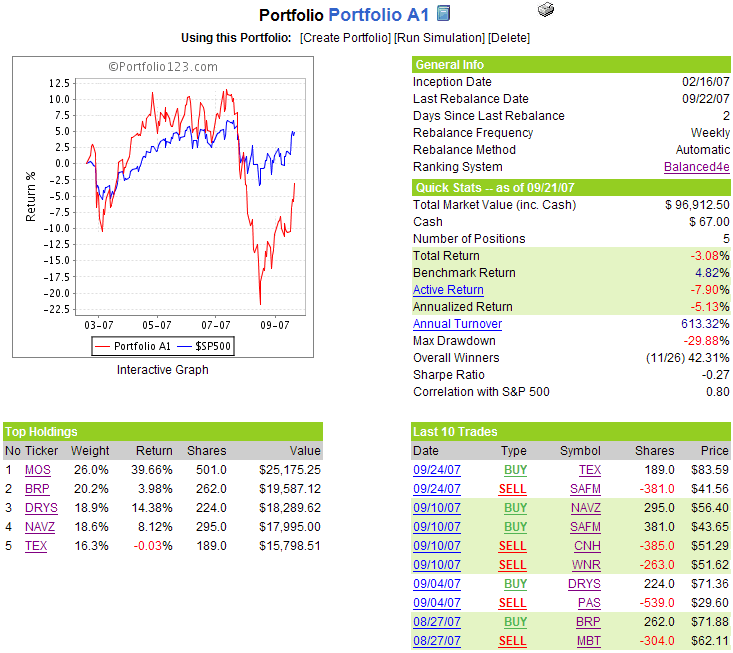
Portfolio A1 Continues Upswing Behind Red Hot Mosaic (MOS)

Thanks to the Fed rate cut, three of Portfolio A1’s five holdings logged gains of 10% or more last week, led by a 12.2% gain in The Mosaic Company (MOS), which now sports an impressive 39.7% return in the five weeks it has been in the portfolio. Also part of last week’s winning trio were DryShips (DRYS) and Navistar (NAVZ). By the time the abacus was put to bed, the gap between the benchmark S&P 500 index and the portfolio had closed to 7.9%, the lowest margin since the mid-August plunge. With a total return of -3.08 since the February 16, 2007 inception, it is beginning to look like the portfolio may soon be back in green.

In the never ending quest for better performance (while keeping a deaf ear to any concerns about high turnover) this week the stock ranking system has jettisoned Sanderson Farms (SFM) in favor of Terex (TEX), an infrastructure play with significant exposure to China. A returnee, Terex was a very strong contributor to the portfolio earlier in the year.

There are no other changes to the portfolio this week.

A snapshot of the portfolio is as follows:

DISCLAIMER: "VIX®" is a trademark of Chicago Board Options Exchange, Incorporated. Chicago Board Options Exchange, Incorporated is not affiliated with this website or this website's owner's or operators. CBOE assumes no responsibility for the accuracy or completeness or any other aspect of any content posted on this website by its operator or any third party. All content on this site is provided for informational and entertainment purposes only and is not intended as advice to buy or sell any securities. Stocks are difficult to trade; options are even harder. When it comes to VIX derivatives, don't fall into the trap of thinking that just because you can ride a horse, you can ride an alligator. Please do your own homework and accept full responsibility for any investment decisions you make. No content on this site can be used for commercial purposes without the prior written permission of the author. Copyright © 2007-2023 Bill Luby. All rights reserved.
 
Web Analytics