Showing posts with label VXX juice factor. Show all posts

Friday, December 9, 2011

Taking Profits in VIX Options (and ETPs)

Two hours into today’s session, the trading idea I mentioned yesterday, going long VIX puts, is doing quite well. The VIX Dec 27.50s are up more than 50% and the Dec 30s puts have advanced about 45%.

One question that I believe is much trickier with VIX options than options for most other securities is when and how to take profits. A large reason why taking profits in VIX options has an extra layer of complexity and difficulty is due to the mean reversion tendencies of volatility in general and the VIX in particular.

Another potential complicating factor regarding the management of VIX options positions has to do with their underlying. I hope that by now readers of this blog have had it drummed into their head that the VIX futures are the best proxy for the underlying in VIX options, not the cash VIX or VIX index, which is the VIX that is most often quoted in the media. Anyone holding positions in VIX options – and VIX ETPs for that matter – should be monitoring the VIX futures.

Looking at the changes in the first two hours of trading, one can see the typical pattern in which the front month (December) VIX futures (-6.3%) are moving about 80% as much as the cash VIX (-7.9%), with the second month (January) futures (-4.4%) moving about 56% of the cash VIX. This is right in line with historical norms. For an additional data point, VXX, which is a blend of front month and second month VIX futures, is down about 4.7%, which makes sense in that hold a disproportionate amount of front month futures at this point in the options expiration cycle.

So what does this all mean for taking profits in VIX options?

First, I cannot overstate how important it is to watch the VIX futures and understand how they move in relation to the cash VIX.

Second, because the VIX has a tendency to mean revert and thus often reverse recent sharp moves in either direction, it is important to take at least partial profits when one is the beneficiary of a significant favorable move in volatility. I like to take profits in 25% or 50% of my position, for instance, if my VIX options appreciate by 50%.

Third, keep in mind that the long VIX puts mentioned above are still out of the money and have no intrinsic value. As a result, they are subject to significant time decay (theta) each day and therefore will lose value if there are no additional favorable moves in volatility.

The bottom line is that harvesting VIX profits can be a challenging task and should be thought of as part art and part science. One only has to look at the many steeple-shaped VIX spikes to appreciate just how fleeting large profit opportunities in VIX options can be.

Besides, who knows what the next rumor out of Europe will be and how much the masses will panic or unpanic.

Related posts:


[source: LivevolPro.com]

Disclosure(s): short VXX at time of writing; Livevol is an advertiser on VIX and More

Thursday, October 22, 2009

Disappointment Lurks as Volume Surges in VXX

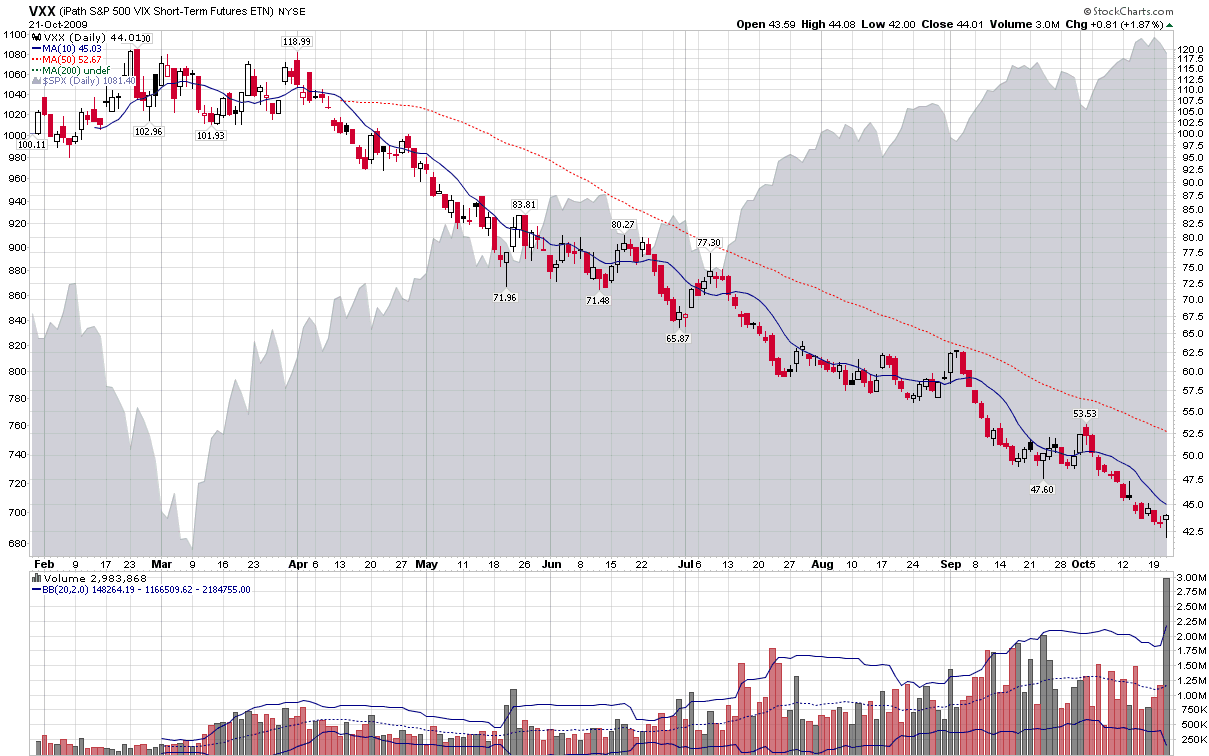
At the beginning of the month, when I penned Why VXX Is Not a Good Short-Term or Long-Term Play, I figured that would likely be my last word on the subject. Well, I haven’t changed my mind, but I saw myself shaking my head more than a few times yesterday, when the volume in VXX surged to a new record, obliterating the old record by 50%.

Perhaps this time around the new VXX longs were expecting something different, but yesterday’s numbers just reinforce my earlier points. Sure, VXX gained 1.87% on the day, but the VIX gained 6.32%. In other words VXX longs participated in less than 30% of the VIX spike.

Moves like yesterday illustrate some of my thinking about why VXX is not a good short-term volatility play. As I have noted in the past:

“The VXX juice factor (VXX movement as a percentage of VIX movement) shows just how disappointing the performance of VXX relative to the VIX is when the VIX spikes. The bottom line is that when you need it most, VXX is at its worst in tracking the VIX.”

When it comes to speculative or hedging plays using volatility products, VIX options (or futures) are typically the best choice. For short volatility positions, particularly when you see a VIX spike, think about shorting VXX. Those who favor long VXX positions have the odds stacked against them.

For more on the shortcomings of VXX, readers are encouraged to check out:

[source: StockCharts]

Thursday, October 1, 2009

Why VXX Is Not a Good Short-Term or Long-Term Play

During the last month, the iPath S&P 500 VIX Short-Term Futures ETN (VXX) has been turning over an average of 1.3 million shares per day. I am certain that a fair portion of the purchases of VXX have come from investors who have sought to protect their portfolios from an increase in volatility and/or downturn in stocks.

Unfortunately, VXX has considerable shortcomings, both as a short-term and a long-term play.
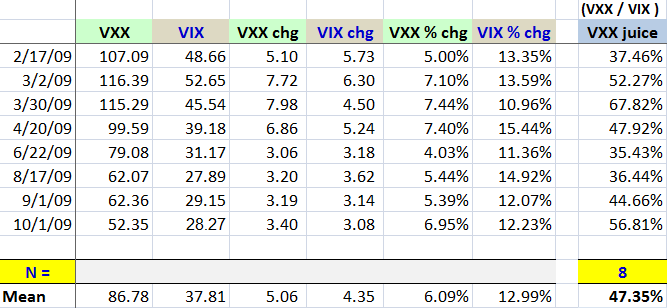
Investors who are long VXX hope that when volatility increases dramatically, they will benefit by holding the short-term VIX ETN. In fact, when the VIX spikes 10% or more in one day, VXX generally does not cover even half of that move in percentage terms. The table below shows the eight instances since the January launch of VXX in which the VIX rose 10% or more in one day. The results speak for themselves, but in the eight instances over the course of eight months, VXX has been capturing only one third to two thirds of the VIX spike.

Ironically, when the VIX is flat or falls, VXX does a much better job of keeping pace. The VXX juice factor (VXX movement as a percentage of VIX movement) shows just how disappointing the performance of VXX relative to the VIX is when the VIX spikes. The bottom line is that when you need it most, VXX is at its worst in tracking the VIX.


VXX may be even less effective as a long-term holding. As previously discussed in VXX Calculations, VIX Futures and Time Decay, VXX suffers from negative roll yield when the VIX is in contango (when the front month VIX futures are less expensive than the second month futures), with the result that VXX loses a few cents each day due to rebalancing, just like a tire with a slow leak. This is why VXX is not able to sustain its value the way the VIX does. Today, for instance, the VIX closed at 28.27 and VXX closed at 52.35. Back on June 9th, the VIX also closed at 28.28, yet on that day VXX closed at 74.26. That 29.5% drop in VXX while the VIX held steady is largely the result of negative roll yield – and is evidence that VXX is usually not viable as a long-term holding.

I have discussed the movements of VXX in considerable detail in my subscriber newsletter, but for those who are interested in more information about VXX on the blog, some related posts include:

Thursday, May 21, 2009

VXX Volume Tops Million Mark as Investors Embrace New Volatility ETN

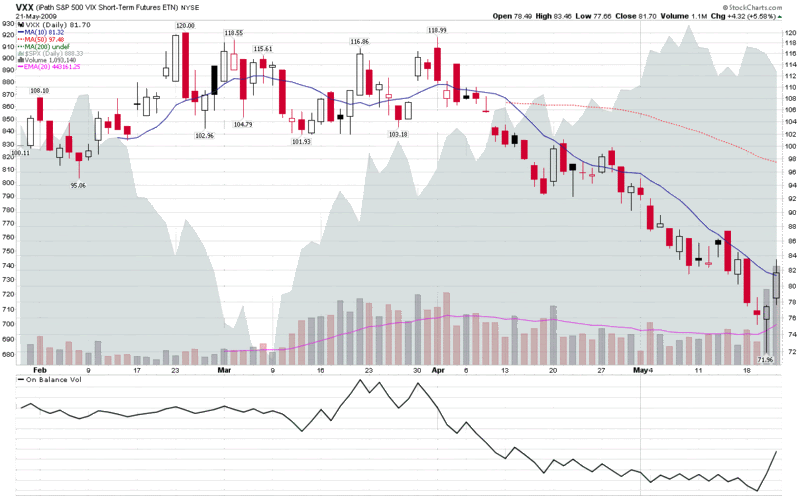
When I penned yesterday’s Record Volume in VXX, I had an inkling that the VIX-based volatility ETN might be having a coming out party soon. I did not, however, expect VXX to attract so much attention in just 24 hours.

With today’s 1,094,140 shares traded, VXX is now officially in the big leagues and is sure to be added to the watch lists of many more retail investors and find itself in the repertoire of a wider variety of hedge funds.

The chart below updates the information from yesterday’s chart and adds an on balance volume study to highlight the strength of the move off of yesterday’s bottom.

For those who may be new to VXX, it is important to keep in mind that while there is strong directional agreement between VXX and the VIX (they move in the same direction in about 6 out of every 7 sessions), VXX tends to move at only half the rate the cash/spot VIX on a daily basis. So while VXX may lag the VIX in terms of a juice factor, it is probably the best way to trade volatility if one does not wish to do so in the options or futures market.

If this almost four-month-old volatility ETN were to have a motto, perhaps it would be, “When directionally correct is good enough!”

For more information on VXX, readers may also wish to check out:

[source: StockCharts]

Disclosure: Long VIX and VXX at time of writing.

Thursday, May 7, 2009

VXX Calculations, VIX Futures and Time Decay

As I type this, the VIX is up about 6.5% for the day and VXX is only up about 2.0%.

While it looks like today is a good day to be long volatility, getting 4/13 of the move in the VIX with a VIX ETN does not look like an efficient way to play the volatility trade. In fact, I have discussed the issue of what I call the VXX juice factor on a number of occasions and have concluded that on average, anyone owning VXX should not expect to capture more than 50% of the move in the VIX, at least based on data since the January 30th launch of VXX. Going forward, however, 40% might be a more realistic target.

A reader asked about the extent to which VXX returns may be adversely impacted by time decay, rolling and other issues.

When it comes to VXX price erosion, there are two primary factors to consider. The first is the mean-reverting tendency of the VIX and VIX futures. The second factor is the daily rebalancing of the two VIX futures that are utilized to calculate the value of VXX.

The VXX calculation is derived from the two nearest months of VIX futures. At the moment, this means the May futures and the June futures. For the sake of simplicity, I will refer to these as the front month and second month futures. I’ll explain the calculation with an example.

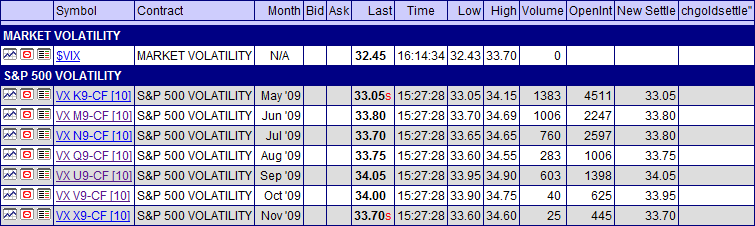
VIX options expire on Wednesday, May 20th this month (see 2009 expiration calendar), which means that at the close of business on the day before expiration, May 19th, VXX will hold exclusively the June VIX futures (VX-M9). As each calendar day passes, VXX will sell 1/23 (there are 23 trading days in the current VIX options expiration cycle) of the June VIX futures position and buy an identical amount of the July VIX futures, so that the percentage holdings of the front month and second month futures always create a synthetic blend of a basket of VIX futures with a constant maturity of 30 days. [Note that this is different from the calculations of the cash VIX, where the front month and second month options roll forward one month 8 days before VIX options expiration.]

As long as the near month and second month futures are similar in price, the daily rebalancing has little effect on the price of VXX. When the term structure has a steep slope and there is a substantial difference in price between the front month and the second month (as was the case with SPX options on 11/20/08), the daily rebalancing can generate its own profit and loss. As the graphic below shows, there was a 0.75 difference between the May and June futures settlement prices yesterday. Calculating 1/23 * 0.75, yesterday’s daily rebalancing probably resulted in a 0.03 change in price.

In terms of pricing implications, when VIX futures are in contango (upward sloping over time, second month more expensive than front month), there will be a daily loss of value due to rebalancing. On the other hand, when VIX futures are in backwardation (downward sloping over time), the daily rebalancing process will generate a gain.

Following the launch of VXX on January 30th, VIX futures were consistently in backwardation until the beginning of April, at which point the term structure flattened out. At present, there is some slight contango that could adversely impact VXX prices going forward. Technically, this rebalancing is called "roll yield" and when the roll yield becomes negative, VXX prices will suffer daily losses as a result.

For more on this subject I recommend Standard & Poor’s white paper on VXX returns: Directional Exposure to Volatility Via Listed Futures

For more details on VXX, iPath has two documents worth checking out:


[graphics: FutureSource]

Disclosure
: Long VIX and VXX at time of writing.

Tuesday, April 21, 2009

Lost in Translation: VXX and VXZ

Partly based on some thinking I laid out last week in Some VIX Milestones…and a Prediction, I was fortunate to be long VXX, the iPath S&P 500 VIX Short-Term Futures ETN, going into yesterday’s session.

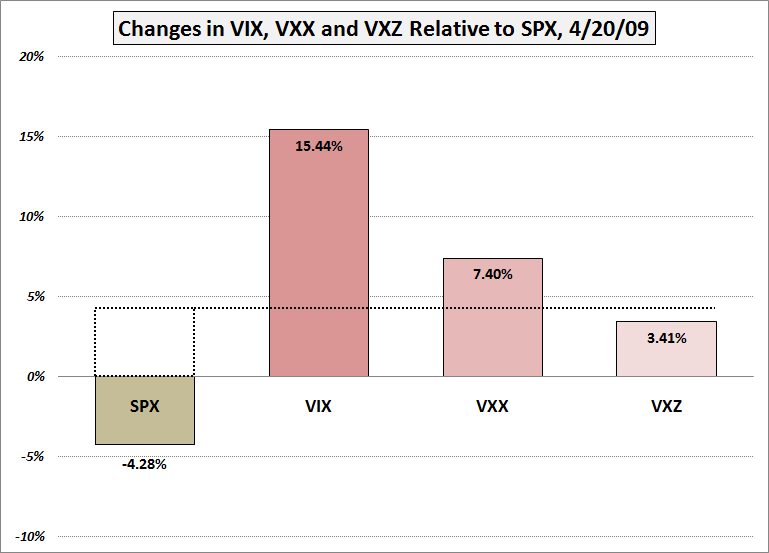
VXX notched a nice one day gain of 7.40%, but this was less than half of the 15.44% gain in the VIX. On the other hand, VXZ, iPath S&P 500 VIX Mid-Term Futures ETN, which targets VIX futures approximately five months out, moved a mere 3.41%, less than half of VXZ. As shown in the chart below, VXZ’s jump did not even match that of the 4.28% drop in the SPX.

All things considered, these are about the percentage moves relative to the VIX that one should expect. I have previously discussed the relative juice factor in VXX Data Now Painting an Accurate Picture and elsewhere, but apparently not everyone has internalized this information yet. Further, if you follow any of the term structure discussions here, the volatility predictions as a function of months into the future is a recurring theme.

With almost three months of data to draw upon, VXX is now averaging close to 50% of the daily move in the VIX and VXZ is averaging approximately 20% of the daily move in the VIX. The bottom line is that if you are looking for the type of moves generated by the cash VIX, your best bets are VIX options, VIX futures or a 2x leveraged play on VXX.

Personally, I find VIX options to generally be the most attractive way to trade the VIX, given their liquidity and the flexibility inherent in structuring a wide range of options positions.

[graphic: VIXandMore]

Disclosure: Long VXX at time of writing.

Wednesday, March 4, 2009

VXX Data Now Painting an Accurate Picture

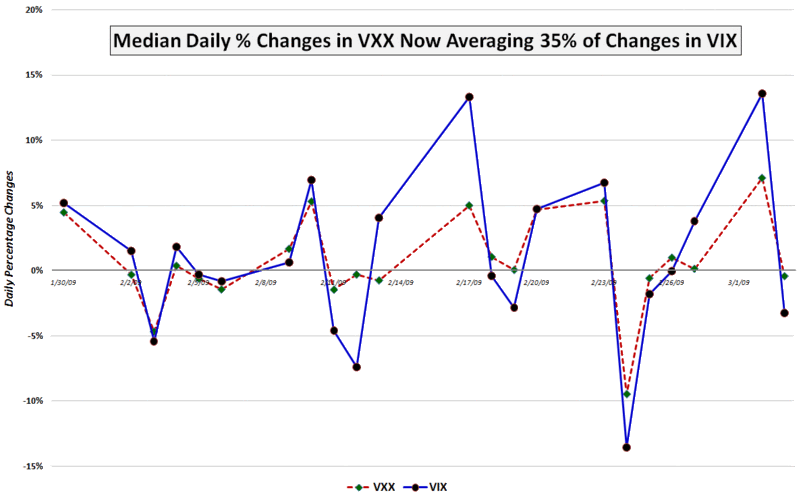
Just one week ago, I posted an earlier version of the graphic below in VXX Juice Factor and Portfolio Insurance Implications. In that article, I explained how daily percentage price changes in VXX (what I call the VXX juice factor) had been running at the rate of about 70% of the changes in the VIX. This was in sharp contrast to the 35-40% my modeling of historical data had led me to expect when I published VXX Tracking VIX at 80+% Today the previous week.

Now, after 22 days of trading, the actual data for VXX have converged with my model and expectations.

Here is a quick summary of the first 22 days, with some takeaways that should prove to be helpful going forward:

  • The median one day percentage change in VXX has been approximately 35% of the change in the VIX
  • 77% of the time the two volatility measures have moved in the same direction (with divergences limited to days in which the percentage changes were small)
  • 14% of the time VXX made a sharper move than the VIX (again, only on days with relatively small changes)
  • On the three days the SPX has dropped more than 4%, VXX has moved 37%, 52% and 76% as much as the VIX, for an average of 55%
I expect these numbers, particularly the 35% and 55% ones, to come very close to matching the long-term performance of VXX relative to the VIX.


[graphic: VIXandMore]

Wednesday, February 25, 2009

VXX Juice Factor and Portfolio Insurance Implications

While I continue to receive quite a few questions about VXX, the new the VIX ETN, I note that volume seems to have settled into a pattern of approximately 100,000 shares per day. Perhaps the interest in this product is going to be more of an academic nature in the early stages, before trading and hedging strategies become better developed.

In any event, one of the key issues surrounding VXX has to do with what I call the VXX juice factor. In a nutshell, the question surrounds what sort of movement one can expect from a long VXX position relative to the VIX. Another way of looking at the same issue is to phrase the question in terms of how much VXX will move in one direction when the SPX moves in the opposite direction.

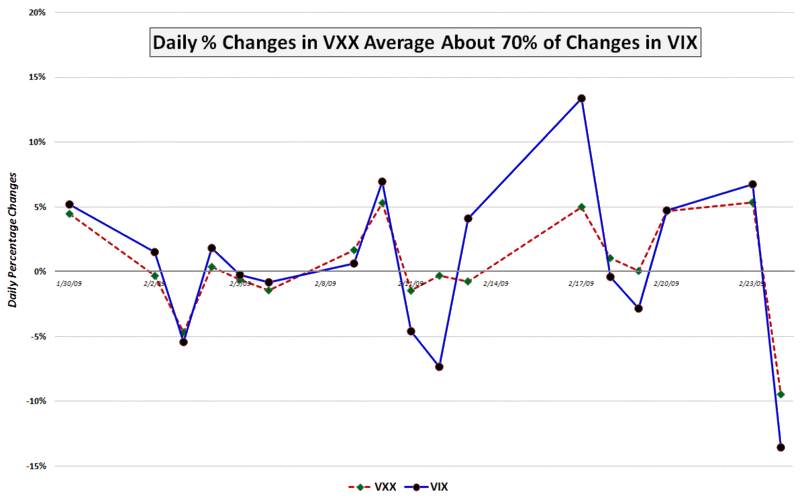
Last Friday, in VXX Tracking VIX at 80+% Today, I attempted to answer the first of these questions based on historical data. Today I will take a shot at both questions, using data from the first 17 days since the launch of VXX and with the aid of the graphic below.

In the first 17 days it has traded, I show VXX with a juice factor of just under 70%, meaning that, on average, for every 1% movement in the VIX, VXX has moved about 0.7%. Unfortunately, when the VIX makes a large move, this is the time when VXX typically has the smallest juice factor, as the divergences on February 12th and February 17th demonstrate.

At this stage, my working hypothesis is that VXX provides the most portfolio insurance when you don’t need it at all and is least effective when you need it the most.

I will address this issue in more detail going forward and bring some more data to bear on the subject.

[source: VIXandMore]

DISCLAIMER: "VIX®" is a trademark of Chicago Board Options Exchange, Incorporated. Chicago Board Options Exchange, Incorporated is not affiliated with this website or this website's owner's or operators. CBOE assumes no responsibility for the accuracy or completeness or any other aspect of any content posted on this website by its operator or any third party. All content on this site is provided for informational and entertainment purposes only and is not intended as advice to buy or sell any securities. Stocks are difficult to trade; options are even harder. When it comes to VIX derivatives, don't fall into the trap of thinking that just because you can ride a horse, you can ride an alligator. Please do your own homework and accept full responsibility for any investment decisions you make. No content on this site can be used for commercial purposes without the prior written permission of the author. Copyright © 2007-2023 Bill Luby. All rights reserved.
 
Web Analytics