More on PUT Returns
Given the surprising interest in put-write strategies and the CBOE PutWrite Index (PUT), I have spent some additional time with the PUT data to see what sort of secrets I might be able to uncover.
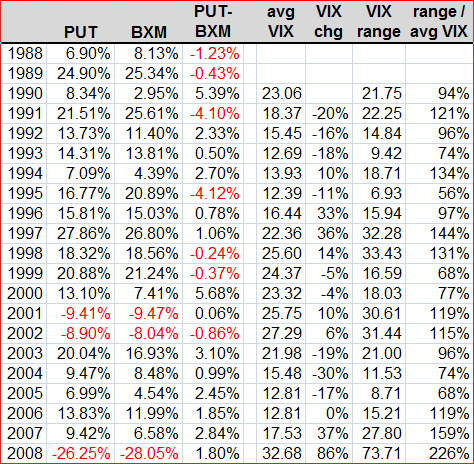
I must confess that the more I dig, the more I am intrigued by this index put-write approach. Since there has been considerable discussion about the differences in return between the PUT and the closely related CBOE BuyWrite (BXM) Index, I will start by showing a table that has a year-by-year comparison of the PUT and the BXM. Just for fun I threw in the average VIX for each year, the change in the average VIX from year to year, the VIX range for the year and a ratio of that range divided by the average VIX. While none of these additional data points provides a smoking gun, each offers up a piece of the overall performance puzzle.
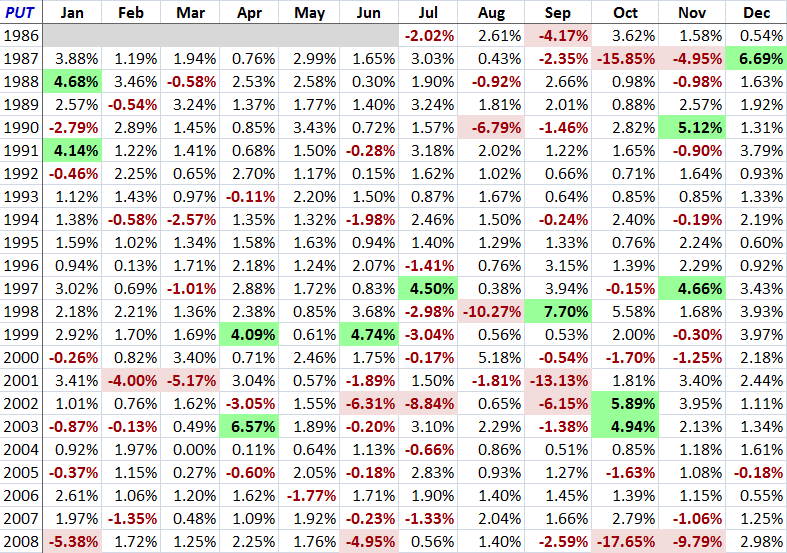
The second graphic is a simple matrix of monthly returns for the PUT since 1986. Not surprisingly, the two worst monthly returns were during the volatility peaks in October 1987 and October 2008. In a related note, several of the most profitable months for the PUT came just after high volatility events.
[Source: CBOE, VIX and More]
For those looking to dig deeper into this issue, consider that put-write absolute and relative returns are largely a function of implied volatility, the trending characteristics of the SPX and interest rates. Note also that that upper chart only goes back to June 1st, 1988 because that is when Standard & Poor’s began reporting daily dividends for the S&P 500 Total Return Index.



31 comments:
Bill,
I can think of two reasons why PUT returns differ from BXM returns.
1) "This design provides higher leverage than the BXM strategy"
This quote is from the CBOE site you referenced: http://www.cboe.com/micro/put/PutWrite.pdf
2) BXM writes the first front-month call that is out of the money.
PUT seems to use a 'series' of 'ATM puts.'
I did not research just how many different options are written. Nor did I find the definition of ATM. Is it the nearest option, or is it the nearest OTM option?
Thus, using different options to write plus the leverage factor should be all it takes for these indexes to provide different returns.
Mark
First, answer to Mark Wolfinger's query - S&P's Put Write Index is the function of one month ATM options sold, and rolled over soon after the expiration, as pointed by ENNIS KNUPP article. The article further suggests that return can be enhanced by selling 4 months ATM options.
Second, I am not sure if Bill's "Put" return matrix takes into account return on T-bills from the premium collected which could be approximately 4.1%. If that is the case, then return should be approximately higher by an average of 4.1% on the "put" matrix.
Chandra
Mark and Chandra,
Thanks for weighing in. It seems as if this may be a multi-part answer.
Chandra, the return on the T-Bills is accounted for as part of the total return calculations.
Also, for the record, one of the developers of the PUT index indicated to me that part of the reason for the performance delta for the PUT vs. the BXM is due to differences in the way the PUT and BXM contracts are rolled, with the PUT takes advantage of "typical trading patterns" that occur on expiration. I can't say I am an expert on trading patterns related to expiration, but this appears to be another piece of this puzzle.
Cheers,
-Bill
What would the returns be if instead of selling at the money puts, you sold them 5% out of the money?
Jim
generic xanax buy xanax 2mg - xanax pills .25
tramadol 50mg tramadol addiction gaza - tramadol que es
alprazolam online is it possible to order xanax online - is purchasing xanax online legal
tramadol online buy tramadol no prescription cod - buy tramadol online no prescription cheap
xanax sale xanax withdrawal paranoia - can i take 2mg of xanax at once
buy tramadol online tramadol versus vicodin - where to buy tramadol cheap
buy tramadol online tramadol hcl 50 mg narcotic - tramadol dosage medication
carisoprodol 350 mg soma carisoprodol back pain - drug test soma carisoprodol
buy tramadol online buy-tramadol-online.org - tramadol ultram ingredients
xanax drug xanax 5 panel drug screen - xanax on drug test
buy cialis online cialis price us - can you buy cialis online no prescription
xanax online long xanax bars kick - 4 bars xanax
buy tramadol tramadol hcl 50 mg addiction - tramadol hcl gout
buy tramadol tramadol 50 mg compared - tramadol dosage pain dogs
buy tramadol is tramadol hcl a narcotic drug - tramadol hcl 50 mg para que es
buy tramadol can get high tramadol hydrochloride - buy tramadol online from usa
buy tramadol generic brand tramadol - buy tramadol online pharmacy
http://staam.org/#21236 tramadol 50 mg long term use - buy tramadol bluelight
http://staam.org/#37708 tramadol for dogs human consumption - where to buy tramadol online usa
http://ranchodelastortugas.com/#30416 generic xanax 3mg pills - round white generic xanax
buy tramadol online tramadol for dogs cost - mister wong tramadol 100mg
http://staam.org/#92453 buy tramadol safely - tramadol 50 mg street value
http://ranchodelastortugas.com/#82165 generic for xanax alprazolam - have you ever bought xanax online
xanax generic xanax bars mg white - does xanax show up parole drug test
buy tramadol online cod purchase tramadol - where to buy tramadolonline
играть в казино рулетку бесплатно or онлайн казино wmz or казино онлайн кристал or казино онлайн шанс or рулетка онлайн развод or играть в рулетку форум
We supply good quality Research Chemicals,VENOMOUS, Benzodiazepines, Pain Medications, Anxiety Medications, Relief Medications, Insomnia Medications,VENOMOUS,Weight Lost Medications, Stimulants, Opiate/Opioid, Research Chemicals&VENOMOUS, etc...
We now offer 30% Discount, Contact us or Check out Our stocks and Prices using the details below:
How to Order Prescription Drugs Safely Online | Where to Order Prescription Drugs Safely Online.
Contact Us:
Delta Bioresearch Chemicals
Text & Call:+86 (184) 7507-2355
Text:+1(619) 356-8501
Whatsapp:+1(619) 356-8501
Email:support@deltabioresearchchemicals.com
Post a Comment