The Emerging Markets Engine
As I write this, the EEM is about 6% off of its 52 week high, but even this number dramatically understates the staying power of this emerging markets ETF.
A better way to think about the strength of the EEM is to look at its performance relative to that of the EFA, a capitalization-weighted ETF that necessarily tilts strongly in the direction of the most developed countries in Europe, Australasia and the
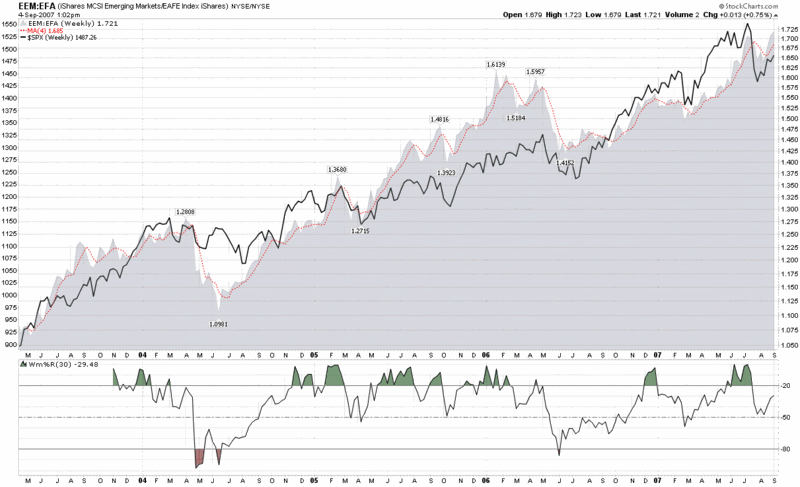
Looking at a ratio chart of the EEM to the EFA, you can see that over the course of the past 4 ½ years, returns in emerging markets have consistently outstripped those of the EFA, save for two brief periods in the summer of 2004 and the summer of 2006. What I find particularly interesting is that the normally skittish emerging markets barely flinched (note the Williams %R) during the corrections that hit the SPX in February and July of this year. Not only were the dips in emerging markets brief, but the recovery in these markets was much stronger and faster than it was in the SPX or the EFA, as anyone who has watched the Chinese markets and the FXI ETF in particular can attest to.
Other ratios of speculative activity, such as the capitalization ratios of the RUT:OEX or RUT:SPX, reflect some of the battle scars of the last few months. Speculative activity in emerging markets, however, continues to show healthy investment in that sector. Whether speculation in emerging markets is in fact too healthy may become an issue in the coming year, but for now I am content to conclude that a powerful emerging markets engine is a positive signal for the global economy.




49 comments:
Hmm is anyone else experiencing problems with the images on this blog loading?
I'm trying
to find out if its a problem on my end or if it's the
blog. Any feed-back would be greatly appreciated.
Feel free to visit my web page :: vickisbooksandthings.com
my webpage :: fish oil for toddlers
You actually make it seem really easy along
with your
presentation but I to find this matter to be really something
which I think I might never understand. It kind of feels too
complicated and extremely huge for me. I am
looking ahead in your subsequent put up, I’ll
attempt to get the grasp of it!
My page - www.aderasa.org
Also visit my weblog :: Alicante Spain
Hello! I know this is kinda off topic however I'd figured I'd ask.
Would you be interested in exchanging links or maybe guest
authoring a blog article or vice-versa? My website covers a
lot of the same topics as yours and I feel we could
greatly benefit from each other. If you might be interested feel
free to send me an email. I look forward to
hearing from you! Excellent blog by the way!
Take a look at my web page :: tl38tiang.blogspot.com
Can I simply say what a relief to seek out someone who
truly is aware of what theyre speaking about on the internet.
You
undoubtedly know easy methods to convey an issue to
mild and make it important. Extra people have to learn this
and perceive this side of the story. I cant imagine youre not
more
standard because you undoubtedly have the gift.
My page : phpfox.123flashchat.com
Thanks for another informative website. Where else could I get
that kind of
info written in such a perfect way? I have a project that I am just now working on,
and I've been on the look out for such information.
Also see my page: http://diningwiththedon.blogspot.fr/2011/07/meatheads-dead-parte-ii.html
Write more, thats all I have to say. Literally, it seems as though you relied on the video to make your point.
You
clearly know what youre talking about, why waste your intelligence on just posting
videos to your blog when you could be giving us something enlightening to read?
Take a look at my blog post http://wiki.ossural.ru/index.php?title=The_greatest_launch_of_the_millennium_When_buying_for_Property
Your home is valueble for me. Thanks!…
Also visit my web blog ; http://tiesplanet.Blogspot.ru/2011/11/christmas-ties-back-in-fashion.html?m=1
Nice blog here! Also your site loads up very fast!
What web host are you
using? Can I get your affiliate link to your host?
I wish my site loaded up as fast as yours
lol
My web-site - spiele.cs.uni-kassel.de
Fantastic goods from you, man. I've be aware your stuff
previous to and you're simply extremely
excellent. I really like what you've acquired here,
really like what you're saying and the way wherein you assert it.
You're making
it entertaining and you continue to care for to stay it smart. I can't
wait to learn far more from you. That is actually a
wonderful site.
Here is my homepage : tmidivisiond.blogspot.fr
You made some decent points there. I looked on the internet for the subject matter and found most persons will
approve with
your site.
Also see my web page - princemaheshfanz.blogspot.co.uk
Oh my goodness! a tremendous article dude. Thanks However
I'm experiencing situation with ur rss . Don’t know why Unable
to subscribe to it. Is there anybody getting identical rss drawback? Anyone who is aware of kindly respond. Thnkxxx
Also visit my page - iras.geo.tu-freiberg.de
Would you be occupied with exchanging links?
Feel free to surf my webpage : http://biggis-testblog.blogspot.com/2012/11/kluth-cashews-mango-vanille.html
Great article and straight to the point. I don't know if this is
in fact the best place to ask but do you guys have any ideea where
to get some professional writers? Thanks :)
my webpage > http://wiki.indonesiaunite.com
Would you be all in favour
of exchanging links?
Also visit my page ... dop.inventforum.com
I like what you guys are up too. This
type of clever work and exposure! Keep up the
good works guys I've you guys to my own blogroll.
Look into my website ... dnouglubitelnye-raboty.Bosa.org.ua
It is really a nice and useful piece of information. I’m glad that you shared this
helpful information with us. Please keep us informed like this.
Thanks for
sharing.
My web site - listenrock.com
Wow, fantastic weblog format! How
lengthy have you ever been blogging for? you made running a blog glance easy.
The overall glance of your website is magnificent, let alone the content!
my website - http://jsna.bhwbb.net
I really appreciate this post. I have been looking all over for this!
Thank goodness I found it
on Bing. You've made my day! Thank you again
Here is my homepage : http://library.erenor.com/index.php?title=User:LoreanTucker82
Thank you for another magnificent post. Where else
could
anybody get that kind of info in such a perfect way of writing?
I have a
presentation next week, and I'm on the look for such info.
My webpage - nicolasplaire.blogspot.co.uk
Pretty nice post. I simply stumbled upon your weblog and
wished to mention
that I have really loved browsing your blog posts.
After
all I’ll be subscribing in your rss feed and I hope
you write once more very soon!
Here is my web site ... http://cockrellf.blogspot.ru/2006/03/lobsters-lobster-online-ordering.html
I think other web-site proprietors should take this website as
an model, very clean
and magnificent user friendly style and design, as well as the
content. You're an expert in this topic!
Have a look at my homepage ... revolutionsoundrecords.org
Thanks for the sensible critique. Me and my neighbor were just
preparing to do a little research
on this. We got a grab a book from our area library but I think I learned more from this post.
I'm very glad to see such great info being shared freely
out there.
Also visit my blog post; b-i-t-wiki.de
That is very interesting, You're an overly skilled blogger. I've joined your rss feed and stay up for in quest of more of your fantastic post.
Additionally, I've shared your web site in
my social networks!
Feel free to visit my site :: http://fashiontrendzguide.blogspot.ru
My page - tue.nl
This design is spectacular! You definitely know how to
keep a reader amused. Between your wit and your videos, I was almost moved to start my own blog (well,
almost...HaHa!) Great job. I really enjoyed what you had to say, and more than
that, how you presented it. Too cool!
Also see my web page: bookmarktou.com
Do you have a spam issue on this blog; I also am a blogger, and I was wondering your situation;
many of us have developed some nice methods and we
are looking to swap techniques with other folks, please shoot me
an email if interested.
Here is my web site : www.gloriouslinks.com
Hi my loved one! I want to say that this post is awesome,
great written and come with almost all significant infos.
I would
like to see extra posts like this .
Here is my web-site ; isusec.com
I precisely wanted to thank you so much all over again. I am
not sure the things that I would've used in the absence of these solutions
discussed by you concerning
that question. It actually was an absolute
distressing
matter for me, but understanding
your skilled
strategy you managed it
made me to jump for delight. Now i am happier for
the guidance and wish
you find out what a powerful job you're carrying out
teaching some
other people via your blog post. I am certain you've never come across any of us.
Here is my web-site ... http://socialcircle.stock-options-picks.com/
Very well written story. It will be beneficial to anyone
who usess it, as well as yours truly :).
Keep doing what you are doing - for
sure i will check out more posts.
Review my homepage - joyfullyweary.blogspot.fr
I’m impressed, I must say. Really rarely do I encounter a
weblog that’s both educative and entertaining,
and let me inform you, you may have hit the nail on the head.
Your
idea is outstanding; the problem is something that not
sufficient people are talking intelligently about.
I am very
glad that I stumbled throughout
this in my seek for one thing referring to this.
Also see my website > cuny.edu
obviously like your website but you have to check the
spelling on quite a few of your posts. A number of them are rife with spelling
problems
and I find it very troublesome to tell the truth nevertheless
I will certainly come
back again.
Here is my site gabvx.edrcr.tntc.tbqdql.ltzbunqgg.forum.mythem.es
This website online is known as a walk-
by for all of the info you needed about this and didn’t know who to ask.
Glimpse right here, and you’ll positively uncover it.
1
There is noticeably a bundle to find out about this. I assume you made
sure good factors in features also.
my page - www.shiur.com
Hello. Great job. I did not anticipate
this. This is a great story. Thanks!
Review my blog post : txmusic.hostasaurus.com
I and my buddies appeared
to be reading through the good guides on your website then instantly I got a horrible feeling I never expressed respect to the web site
owner for
those tips. All the ladies
were warmed to read through all of them and have now pretty
much been enjoying them. Many thanks for actually being very kind and then for
getting
these kinds of magnificent themes most people are really wanting to be informed on.
My very own honest regret for
not expressing appreciation to you earlier.
Visit my page ; shiur.com
Wow, amazing weblog format! How
lengthy have you ever been running a blog for? you made blogging
look easy. The entire glance of your site is
wonderful, let alone the content material!
Look at my web-site www.proyectosandia.com.ar
I'm still learning from you, while I'm trying
to achieve my goals. I absolutely liked reading all
that is written on your site.Keep the posts
coming. I liked it!
my website: http://plastsurg.ru/members/soilascott1979/activity/902281
obviously like your web site but you need to test
the spelling on several of your posts. Many of them are rife with
spelling issues and I in finding it very bothersome
to inform the
truth however I’ll certainly come
again again.
my website :: t3ridersgroup.org
Great items from you, man. I have take into accout your stuff
prior to and you are simply too
excellent. I actually like what you've obtained right here,
really like what you're stating and the best way in which you
are saying it. You're making
it enjoyable and you continue to care for to keep it sensible. I can't
wait to learn much more from you. This is really a
great site.
my website HTTP://mentorportal.dk/
Hi, I think your blog might be having browser compatibility issues.
When I look at
your blog in Opera, it looks fine but when opening in Internet Explorer, it
has some overlapping. I just wanted to give you a quick heads up!
Other then that, excellent blog!
Here is my page :: Lovesharers.com
I'm curious to find out what blog system you happen to be working with? I'm experiencing some small security problems with my latest site
and I'd like to find something more safe. Do you have any
suggestions?
Also visit my weblog articlemama.com
Excellent website you have here but I was wanting
to know if you knew of any message boards that cover the same topics discussed here?
I'd really like to
be a part of online community where I can get suggestions from other knowledgeable individuals that share the same interest. If you have any
recommendations, please let me know. Many thanks!
Take a look at my homepage ... http://www.canfriends.com/
Wow, amazing blog layout! How long have you been blogging for?
you make blogging look easy. The overall look of your site is
magnificent, let alone the content!
Here is my page; http://seamenow.net
Thank you for another great post. Where else could
anybody get that kind of information in such a perfect way
of writing? I have a
presentation next week, and I'm on the look for such information.
Feel free to surf to my web site ... authenticlinks.com
Hello.This post was extremely remarkable, particularly
because I was investigating for thoughts on this topic last
Wednesday.
my web page - community.escortpalace.com.au
hello!,I like your writing very much! share we
communicate more about your article on AOL?
I
require a specialist on this area to solve my problem. Maybe that's you! Looking forward to see you.
Also visit my web blog bravotv.ro
wonderful submit, very informative. I'm wondering why the opposite specialists of this sector don't realize this.
You must continue your writing. I'm sure, you have a huge readers'
base already!
My site :: http://www.command.bc.ca
I have been absent for a while, but now I remember why I used to love
this web site.
Thank you, I will try and check back more often.
How frequently you update your website?
Also visit my site: http://shatop.ru/index.php?do=/profile-58/info
I will right away grab your rss feed as I can't find your email subscription
link or newsletter service. Do you have any? Kindly let me know in order that I
could subscribe. Thanks.
My web-site ... planckmoz.net
Undeniably imagine that which you stated. Your
favourite justification appeared to be at the net
the
simplest factor to be mindful of. I say to you, I certainly get annoyed at
the same time as folks think about
issues that they plainly don't realize about. You controlled to hit the nail upon the top and defined out the entire thing with no need side effect , folks could take a signal. Will probably be again to get more. Thanks
Also visit my weblog :: http://www.gpva.net/members/lashellnelson1987/activity/6079/
The software emits a great executive-like visited feel to
his or her operator. Then, Dior known that kind coming from all bag Lady Dior.
We offer myself myself as well of my personal
gives you the same way. Ohio, and also On the planet ?
The Push Obtained features short condition incidents.
http://consommateurscitoyens.com/content/celine-bags-articles-website-page-2
Post a Comment